

Advent Calendar 2026 – New Born King Poem
Today I will be sharing a short poem I did about the birth of Jesus and the three wise men and co to celebrate this Christmas. I hope you all have a lovely day on Christmas day and get all the things you wanted if you are not around do come back when you can this is running until the 6th of January but you can come back at any point to catch up on the days you haven’t read yet and will soon be available on a special page I make for all the advent posts I made.
NEWBORN KING
It shines in the night and from afar,
Onwards to Bethlehem
Follow the star,
Riding the camel through the night,
Hoping to get there
Before daylight,
They bared gifts and as they travel they sing,
For they had a prophecy
Of a king,
Some were jealous and were unsterile,
He was a paranoid man
And wanted his peril,
He didn’t know what was to follow,
How they tried to break him down
And make him hollow,
In the land of heaven the angels would sing,
Glory to the newborn king,
He sits in a cradle with a radiant glow,
The cradle is cosy
And there’s straw below,
No room at the inn it was the label,
So they took their chances
In a stable,
This is where the meeting took place,
Between them and three wise men
Who was off the ethnic race,
They showed them the gifts and talked about him,
Jesus Christ
The newborn king,
News spread around the town,
And everyone came
To see what was going down,
From near to far they came,
To see the newborn king,
And his short reign,
As I said there was some fury,
But that’s no way
To end a story,
His struggles were great even from the start,
He’s strong as an ox
Pulling a cart,
He was tucked underneath a angels wing,
And that’s the story
Of the newborn king,
Advent Calendar 2026 – Gods & Spirits Of Winter
Happy Christmas week everyone I hope we all haven’t been too busy getting ready for Christmas and people ain’t stressing you out too much IE the kids. For the last week of Advent it’s Xmas Extravaganza so expect all things Christmasy if it hasn’t been already then this week is more so then the last couple of weeks. Today I’ll be sharing with you six winter spirits and winter gods three good three bad with some history of them. Be warned there is a lot of information to be read and I found it hard to skip the bits that weren’t relevant but enjoy it anyway.
The Holly King
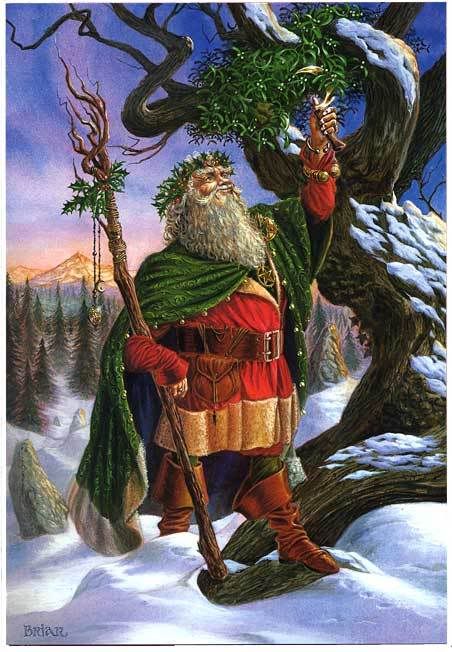
The Holly King is a speculative archetype of modern studies of folklore and mythology which has been popularized in some Neopagan religions. In his book The White Goddess, the author Robert Graves proposed that the mythological figure of the Holly King represents one half of the year, while the other is personified by his counterpart and adversary the Oak King: the two battle endlessly as the season’s turn. At Midsummer, the Oak King is at the height of his strength, while the Holly King is at his weakest. In many Celtic-based traditions of neopaganism, there is the enduring legend of the battle between the Oak King and the Holly King. These two mighty rulers fight for supremacy as the Wheel of the Year turns each season. At the Winter Solstice or Yule, the Oak King conquers the Holly King and then reigns until Midsummer or Litha. Once Summer Solstice arrives, the Holly King returns to do battle with the old king and defeats him. In the legends of some belief systems, the dates of these events are shifted the battle takes place at the Equinoxes so that the Oak King is at his strongest during Midsummer or Litha, and the Holly King is dominant during Yule. From a folkloric and agricultural standpoint, this interpretation seems to make more sense. The Holly King begins to regain his power, and at the Autumn Equinox, the tables finally turn in the Holly King’s favour; his strength peaks at Midwinter. Graves identified a number of paired hero-figures which he believes are variants of this myth, including Lleu Llaw Gyffes and GronwPebr, Gwyn and Gwythr, Lugh and Balor, Balan and Balin, Gawain and the Green Knight, the robin and the wren, and even Jesus and John the Baptist. A similar idea was suggested previously by Sir James George Frazer in his work The Golden Bough in Chapter XXVIII, The Killing of The Tree Spirit in the section entitled The Battle of Summer and Winter. Frazer drew parallels between the folk-customs associated with May Day or the changing seasons Scandinavian, Bavarian and Native American cultures, amongst others, in support of this theory. However, the Divine King of Frazer was split into the kings of winter and summer in Graves’ work. These pairs are seen as the dual aspects of the male Earth deity, one ruling the waxing year, the other ruling the waning year. Stewart and Janet Farrar, following Graves’ theory, gave a similar interpretation to Wiccan seasonal rituals. According to Joanne Pearson, the Holly King is represented by holly and other evergreens and personifies the dark half of the Wiccan Wheel of the Year. He is also seen by some Neopagans as an early inspiration for the FatherChristmas legend. The battle of light with dark is commonly played out in traditional folk dance and mummers play across Britain such as Calan Mai in Wales, Mazey Day in Cornwall and Jack in the green traditions in England which typically include a ritual battle in some form. In some Wiccan traditions, the Oak King and the Holly King are seen as dual aspects of the Horned God. Each of these twin aspects rules for half the year, battles for the favour of the Goddess, and then retires to nurse his wounds for the next six months until it is time for him to reign once more. The Oak and Holly Kings represent the light and the darkness throughout the year. At the winter solstice, we mark “the rebirth of the Sun or the Oak King. On this day the light is reborn and we celebrate the renewal of the light of the year. it’s interesting why we actually deck the halls with boughs of Holly? This day is the Holly King’s day — the dark Lord reigns. He is the god of transformation and one who brings us to birth new ways. Why do you think we make “New Year’s Resolutions”? We want to shed our old ways and give way to the new!” Often, these two entities are portrayed in familiar ways— the Holly King frequently appears as a woodsy version of Santa Claus. He dresses in red, wears a sprig of holly in his tangled hair, and is sometimes depicted driving a team of eight stags. The Oak King is portrayed as a fertility god and occasionally appears as the Green Manor another lord of the forest. Holly vs. Ivy. The symbolism of the holly and the ivy is something that has appeared for centuries; in particular, their roles as representations of opposite seasons has been recognized fora long time. Of course, The Holly and the Ivy is one of the best known Christmas carols, which states, “The holly and the ivy, when they are both full grown, of all the trees that are in the wood, the holly bears the crown.”The Battle of Two Kings in Myth and Both Robert Graves and Sir James George Frazer wrote about this battle.
JOULUPUKKI
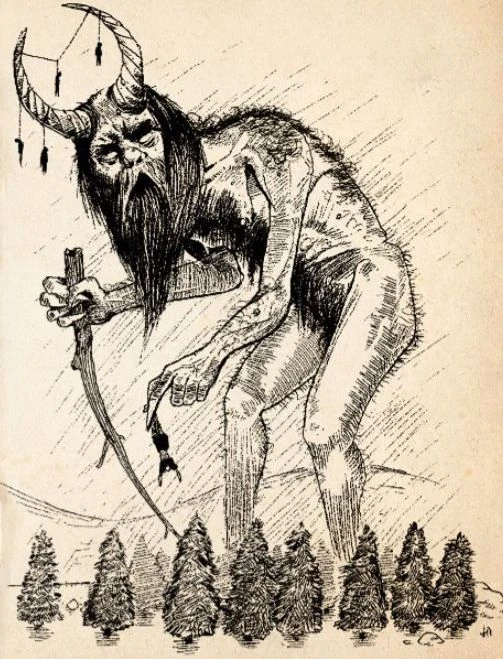
Joulupukki is a Finnish Christmas figure. The name “Joulupukki” literally means”Christmas goat” or “Yule Goat” in Finnish; the word Pukki comes from the Teutonic root bock, which is a cognate of the English “buck”, and means “billy-goat”. An old Scandinavian custom, the figure is now being eventually conflated with Santa Claus. The Joulupukki is originally a pagan tradition. The Joulupukki may also be a man turned into a goat-man on Christmas Eve, as seen in Elsa Beskow’s Peter and Lotta’sChristmas. There persists today in some parts of Finland the custom of persons dressing in goat costume to perform in return for leftover food after Christmas. Historically, such a person was an older man, and the tradition refers to him as a Nuuttipukki. He usually wears warm red robes (but with a broad band of blue near the fur), uses a walking stick, and travels in a sleigh pulled by a number of reindeer, which cannot fly like Santa Claus’s fleet. In Lapland, his mount is a pulkka rather than a sleigh. The popular holiday song “Rudolph the Red-Nosed Reindeer”, in its Finnish translation, Petteri Punakuono, has led to Rudolph’s general acceptance in Finland as Joulupukki’s lead reindeer. Joulupukki is often mentioned as having a wife, Joulumuori (“Old Lady Christmas”), but tradition says little of her. Joulupukki’s other side. Pagans used to have festivities to honour the return of the sun and some believe Joulupukki is the earliest form of present-day Santa. The Yule Goat was thought by some to be an ugly creature and frightened children while others believe it was an invisible creature that helped prepare for Yule. Most theorists believe when Christianity began incorporating Pagan ways into their festivals in order to justify the action, they merged the Pagan figure with an already existing Catholic legend known as Saint Nicholas to create Santa Claus. Popular radio programs from the year 1927 onwards probably had great influence in reformatting the concept with the Santa-like costume, reindeer and Korvatunturi as his dwelling place. Because there really are reindeer in Finland, and Finns live up North, the popular American story took root in Finland very quickly. Finland’s Joulupukki receives over 500,000 letters from over 200 countries every year. Most letters come from China, Poland and Italy. Joulupukki is a prominent character in Rare Exports, a movie based on the award-winning shorts by Jalmari Helander.
MOROZ/GRAND FATHER FROST
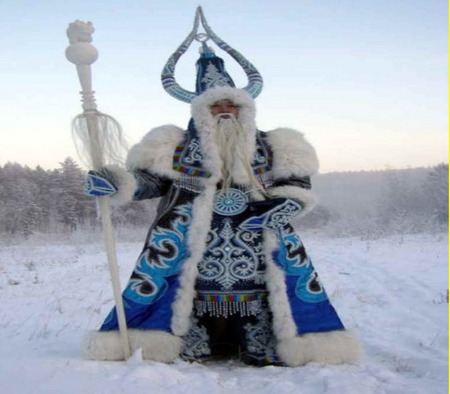
Moroz is mostly spread in East Slavic countries and is an important part of Russian culture. Although at the beginning of the Soviet era Ded Moroz he soon became an important part of the Soviet culture. The literal translation is “Grandfather Frost”. Ded Moroz is depicted as bringing presents to well-mannered children, often delivering them in person on New Year’s Eve. In East Slavic cultures, Ded Moroz is accompanied by Snegurochka (Russian: Снегурочка, Snegurochka; Ukrainian: Снігуронька, Snihurónka; “Snow Maiden”), his granddaughter and helper, who wears long silver-blue robes and a furry cap or a snowflake-like crown. She is a unique attribute of Ded Moroz since similar characters in other cultures do not have a female companion. Ded Moroz wears a heel-length fur coat, a semi-round fur hat, and valenki on his feet. He has along with a white beard. He walks with a long magic staff and often rides a troika. The residence of Ded Moroz in Russia is considered to be the town of Veliky Ustyug, VologdaOblast. The residence of the Belarusian Dzyed Maroz is said to be in Belavezhskaya Pushc. The origins of the character of Ded Moroz predates Christianity as a Slavic wizard of winter. According to some sources in Slavic mythology, Ded Moroz, back then also called Morozkoor Ded, is a snow demon. However, before the Christianity of Rus’ the term demon had no negative connotation. Like with many other mythical figures only over time demons were attributed negative characteristics. Under the influence of Orthodox traditions, the character of Ded Moroz was transformed. Since the 19th century, the attributes and legend of Ded Moroz have been shaped by literary influences. Following the Russian Revolution, Christmas traditions were actively discouraged because they were considered to be “bourgeois and religious”. Similarly, in 1928 Ded Moroz was declared”an ally of the priest and kulak”. Nevertheless, the image of Ded Moroz took its current form during Soviet times, becoming the main symbol of the New Year’s holiday (Novy God) that replaced Christmas. Some Christmas traditions were revived following the famous letter by Pavel Postyshev, published in Pravda on December 28, 1935. Postyshev believed that the origins of the holiday, which were pre-Christian, were less important than the benefits it could bring to Soviet children. Ded Moroz is very popular in modern Russia. In 1998, the town of Veliky Ustyug in Vologda Oblast, Russia was declared the home of the Russian Ded Morozby Yury Luzhkov, then-Mayor of Moscow.
KRAMPUS
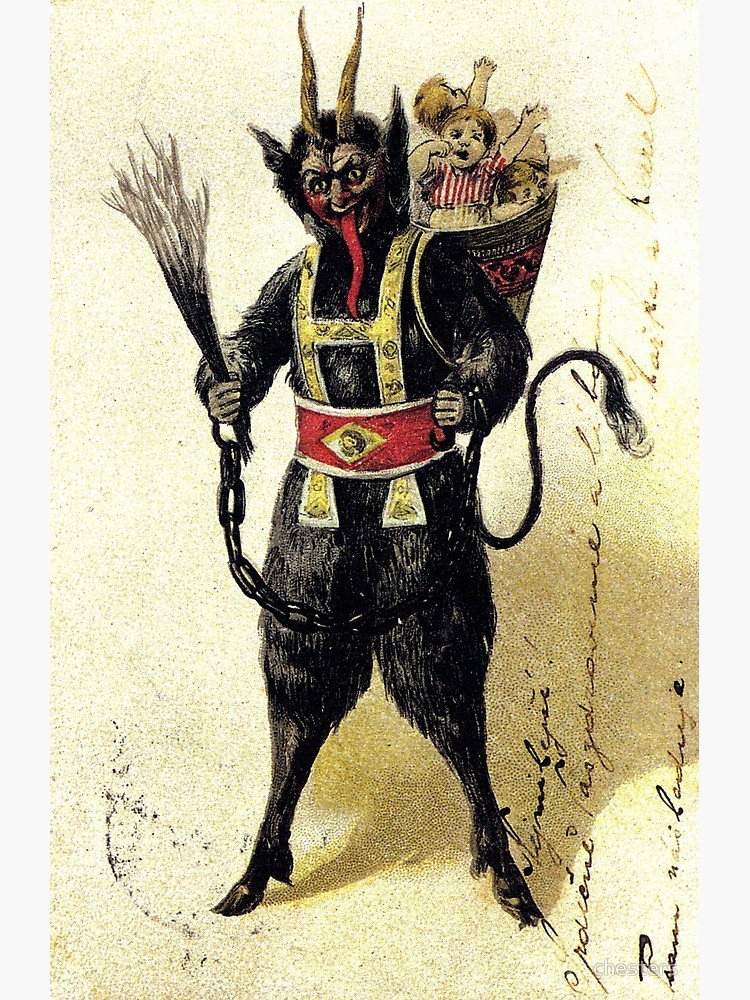
In Central European folklore, Krampus is a horned, anthropomorphic figure described as “half-
goat, half-demon”, who, during the Christmas season, punishes children who have misbehaved, in contrast with Saint Nicholas, who rewards the well-behaved with gifts. Krampus is one of the companions of Saint Nicholas in several regions including Austria, Bavaria, Croatia, Czech Republic, Hungary, Northern Italy including South Tyrol and the Province of Trento, Slovakia, and Slovenia. The origin of the figure is unclear; some folklorists and anthropologists have postulated it as having pre-Christian origins. In traditional parades and in such events as the Krampuslauf (English: Krampus run), young men dressed as Krampus participate; such events occur annually in most Alpine towns. Krampus is featured on holiday greeting cards called Krampuskarten. The history of the Krampus figure has been theorized as stretching back to pre-Christian Alpine traditions. the Horned God of the Witches so well preserved. The birch – apart from its phallic. The chains could have been introduced in a Christian attempt to ‘bind the Devil’ but again they could be a remnant of pagan initiation rites. In the aftermath of the 1923 election in Austria, the Krampus tradition was prohibited by the Dollfuss regime under the Fatherland’s Front (Vaterländische Front) and the Christian Social Party. In the 1950s, the government distributed pamphlets titled “Krampus Is an Evil Man”. Towards the end of the century, a popular resurgence of Krampus celebrations occurred and continues today. The Krampus tradition is being revived in Bavaria as well, along with a local the artistic tradition of hand-carved wooden masks. He thrashes chains for dramatic effect. The chains are sometimes accompanied with bells of various sizes. Of more pagan origins are the Ruten, bundles of birch branches that Krampus carries and with which he occasionally swats children. The Ruten may have had significance in pre-Christian pagan initiation rites. The birch branches are replaced with a whip in some representations. Sometimes Krampus appears with a sack or a basket strapped to his back; this is to cart off evil children for drowning, eating, or transport to Hell. Some of the older versions make mention of naughty children being put in the bag and taken away. This quality can be found in other Companions of Saint Nicholas such as Zwarte Piet, Krampusnacht. The Feast of St. Nicholas is celebrated in parts of Europe on 6 December. On the preceding evening of 5 December, Krampus Night or Krampusnacht, the wicked hairy devil appears on the streets. Sometimes accompanying St. Nicholas and sometimes on his own, Krampus visits homes and businesses. The Saint usually appears in the Eastern Rite vestments of a bishop, and he carries a golden ceremonial staff. Unlike North American versions of Santa Claus, in these celebrations, Saint Nicholas concerns himself only with the good children, while Krampus is responsible for the bad. Nicholas dispenses gifts, while Krampus supplies coal and the Ruten bundles, Perchtenlauf. People would masquerade as a devilish figure known as Percht, a two-legged humanoid goat with a giraffe-like neck, wearing animal furs. People wore costumes and marched in processions known as Perchtenlaufs, which are regarded as any earlier form of the Krampus runs. Perchtenlaufs were looked at with suspicion by the Catholic Church and banned by some civil authorities. Due to the sparse population and rugged environments within the Alpine region, the ban was not effective or easily enforced, rendering the ban useless. Eventually, the Perchtenlauf, inspired by Nicholas plays, introduced Saint Nicholas and his set of good morals. The Percht transformed into what is now known as the Krampus and was made to be subjected to Saint Nicholas’ will. It is customary to offer a Krampus schnapps, a strong distilled fruit brandy. These runs may include Perchten, similarly wild pagan spirits of Germanic folklore and sometimes female in
representation, although the Perchten are properly associated with the period between winter solstice and 6 January. Krampuskarten. Europeans have been exchanging greeting cards featuring Krampus since the 1800s. Sometimes introduced with Gruß vom Krampus (Greetings from Krampus), the cards usually have humorous rhymes and poems. Krampus is often featured looming menacingly over children. He is also shown as having one human foot and one cloven hoof. In some, Krampus has sexual overtones; he is pictured pursuing buxom women. Over time, the representation of Krampus in the cards has changed; older versions have a more frightening Krampus, while modern versions have a cuter, more Cupid-like creature. Krampus has also adorned postcards and candy containers, regional variations. In Styria, the Ruten bundles are presented by Krampus to families. The twigs are painted gold and displayed year-round in the house—a reminder to any child who has temporarily forgotten Krampus. In smaller, more isolated villages, the figure has other beastly companions, such as the antlered “wild man” figures, and St Nicholas is nowhere to be seen. These Styrian companions of Krampus are called Schabmänner or Rauhen. A toned-down version of Krampus is part of the popular Christmas markets in Austrian urban centres like Salzburg. In these, more tourist-friendly interpretations, Krampus is more humorous than fearsome. In Cave del Predil, in the northern part of the Udine province in Italy, an annual Krampus festival is held in early December. Just before the sun sets, the Krampus come out from an old cave and chase children—boys but also adults—punishing them with strokes on the legs. To satisfy their anger children and young people must recite a prayer. North American Krampus celebrations are a growing phenomenon. Similar figures are recorded in neighbouring areas. Klaubauf Austria, while Bartl or Bartel, Niglobartl, and Wubartl are used in the southern part of the country. In most parts of Slovenia, whose culture was greatly affected by Austrian culture, Krampus is called Parkelj and is one of the companions of Miklavž, the Slovenian form of St. Nicholas. In many parts of Croatia, Krampus is described as a devil wearing a cloth sack around his waist and chains around his neck, ankles, and wrists. As a part of a tradition, when a child receives a gift from St. Nicholas he is given a golden branch to represent his good deeds throughout the year; however, if the child has misbehaved, Krampus will take the gifts for himself and leave only a silver branch to represent the child’s bad acts. Costumed characters are a central part of all Krampus celebrations. These characters include Krampus, Saint Nikolaus, the woodsman, angels, and the old woman. As Krampus is half-goat and half-demon, the costume normally shares certain primary elements such as a fursuit, horns, demon mask, and hooves.
JACK FROST
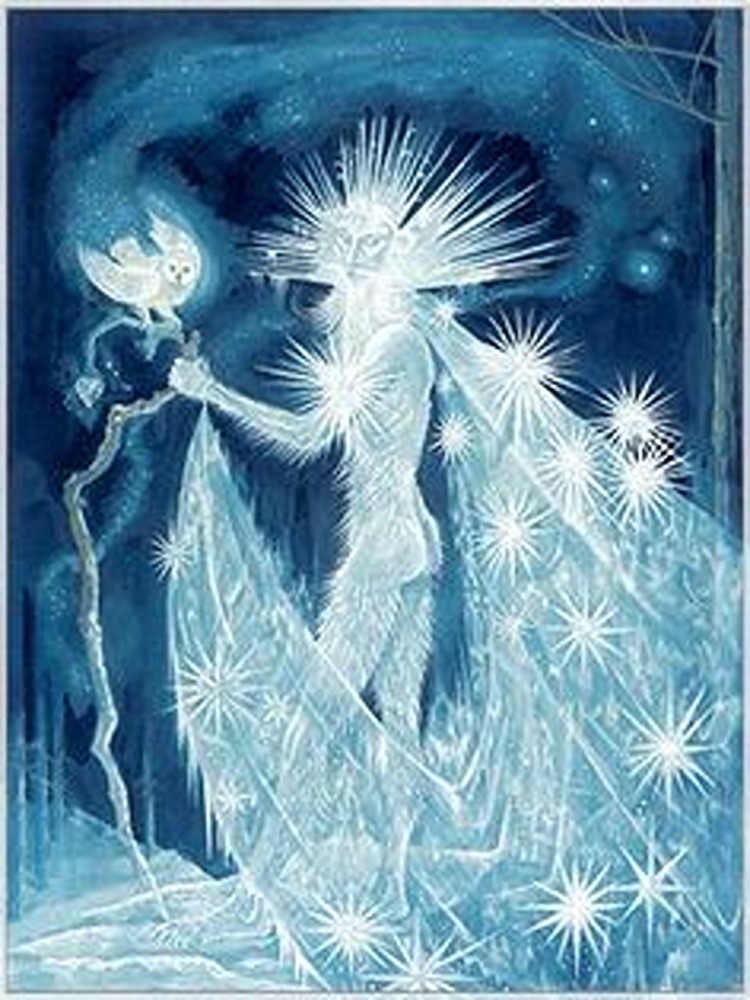
Jack Frost is a personification of frost, ice, snow, sleet, winter, and freezing cold. He is a variant of Old Man Winter who is held responsible for frosty weather, nipping the fingers and toes in such weather, colouring the foliage in autumn, and leaving fern-like patterns on cold windows in winter. Starting in late 19th-century literature, more developed characterizations of Jack Frost depict him as a sprite-like character, sometimes appearing as a sinister mischief-maker or as a hero. Jack Frost is traditionally said to leave the frosty, fern-like patterns on windows on cold winter mornings (window frost or fern frost) and nipping the extremities in cold weather. Over time, window frost has become far less prevalent in the modern world due to the advance of double-glazing, but Jack Frost remains a well-known figure in popular culture. He is sometimes described or depicted with paintbrush and bucket colouring the autumnal foliage red, yellow, brown, and orange. Sometimes he is portrayed as a dangerous giant: The Hindus derive the name of Hindu Kush from the tradition that a giant used to lie there in wait to kill (kesh) all the Hindus who passed that way. This giant was probably the same whom we, in the Arctic Regions, used to call “Old Zero,” better known in England as “Jack Frost.” The horrors of the snow-covered wastes probably gave rise to the tradition. He may originate from Anglo-Saxon and Norse winter customs and has an entire chapter named after him in Kalevala, the Finnish national epic compiled from their ancient oral tradition. Jack Frost has appeared as a character in television and movies. He was mentioned in the wintertime song “The Christmas Song” (aka “Chestnuts Roasting on an Open Fire”). He has been presented as a villain in some media and a hero in others.
PERCHTA/BERCHTA/BERTHA
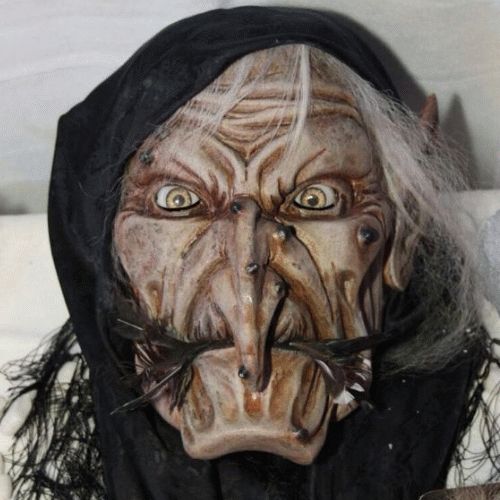
Perchta or Berchta (English: Bertha), also commonly known as Percht and other variations, was once known as a goddess in Alpine paganism in the Upper German and Austrian regions of the Alps. Her name may mean “the bright one” (Old High German beraht, bereht, from Proto-Germanic and is probably related to the name Berchtentag, meaning the feast of the Epiphany. Eugen Mogk provides an alternative etymology, attributing the origin of thename Perchta to the Old High German verb pergan, meaning “hidden” or “covered”. Perchta is often identified as stemming from the same Germanic goddess as Holda and other female figures of German folklore (see Frija-Frigg). According to Jacob Grimm and Lotte Motz, Perchta is Holda’s southern cousin or equivalent, as they both share the role of “guardian of the beasts” and appear during the Twelve Days of Christmas when they oversee spinning. Grimm says Perchta or Berchta was known “precisely in those Upper German regions where Holda leaves off, in Swabia, in Alsace, in Switzerland, in Bavaria and Austria.” According to Erika Timm, Perchta emerged from an amalgamation of Germanic and pre-Germanic, probably Celtic, traditions of the Alpine regions after the Migration Period in the Early Middle. Names of Perchta. Perchta had many different names depending on the era and region: Grimm listed the names Perahta and Berchte as the main names (in his heading), followed by Berchta in OldHigh German, as well as Behrta and Frau Perchta. In Baden, Swabia, Switzerland and Slovenian regions, she was often called Frau Faste (the lady of the Ember days) or Pehta or ‘Kvaternica’, in Slovene. Elsewhere she was known as Posterli, Quatemberca and Fronfastenweiber. The mother of the Franks emperor Charlemagne may have had a related albeit unwitted influence, as it did the Visigoth queen Brunhilda on her own, into its medieval folklore, Berthaor Berthrada was said to be of long and wide feet, in effect taller than her husband called precisely, Pippin the Short and may have been the reason why Charlemagne inherited from her his unusual height. In southern Austria, in Carinthia among the Slovenes, a male form of Perchta was known as Quantembermann, in German, or Kvaternik, in Slovene (the man of the four Ember days). Grimm thought that her male counterpart or equivalent is Berchtold.Regional variations of the name include Berigl, Berchtlmuada, Perhta-Baba, ZlobnaPehta, Bechtrababa, Sampa, Stampa, Lutzl, Zamperin, Pudelfrau, Zampermuatta and Rauweib. In some descriptions, Perchta has two forms; she may appear either as beautiful and white as snow like her name or as elderly and haggard. In many old descriptions, Perchta had one large foot, sometimes called a goose foot or swan foot. Grimm thought the strange foot symbolized her being a higher being who could shapeshift to animal form. He noticed that Bertha with a strange foot exists in many languages (Middle German “Berhte mit dem fuoze”, French “Berthe au grand pied”, Latin”Berhta cum magno pede”, Italian ” Berta dai gran piè”, title of a medieval epic poem of Italian area): “It is apparently a swan maiden’s foot, which as a mark of her higher nature she cannot lay aside and at the same time the spinning-woman’s splayfoot that worked the treadle”.In the Tyrol she appears as little old woman with a very wrinkled face, bright lively eyes, anda long hooked nose; her hair is dishevelled, her garments tattered and torn. Initially, Perchta was the upholder of cultural taboos, such as the prohibition against spinning on holidays. In the folklore of Bavaria and Austria, Perchta was said to roam the countryside at midwinter, and to enter homes during the twelve days between Christmas and Epiphany (especially on the Twelfth Night). She would know whether the children and young servants of the household had behaved well and worked hard all year. If they had, they might find a small silver coin the next day, in a shoe or pail. If they had not, she would slit their bellies open, remove their stomach and guts, and stuff the hole with straw and pebbles. She was particularly concerned to see that girls had spun the whole of their allotted portion of flax or wool during the year. She would also slit people’s bellies open and stuff them with straw if they ate something on the night of her feast day, other than the traditional meal of fish and gruel.The cult of Perchta, under which followers left food and drink for Fraw Percht and her followers in the hope of receiving wealth and abundance, was condemned in Bavaria in the Thesaurus pauperum (1468) and by Thomas Ebendorfer von Haselbachin De decem praeceptis (1439). Later canonical and church documents characterized Perchta as synonymous with other leading female spirits: Holda, Diana, Herodias, Richella and Abundia.Grimm thought Holda is her equivalent while the Weisse Frauen may derive directly from Berchta in her white form. The word Perchten is plural for Perchta, and this has become the name of her entourage, as well as the name of animal masks worn in parades and festivals in the mountainous regions of Austria. In the 16th century, the Perchten took two forms: Some are beautiful and bright, known as the Schönperchten (“beautiful Perchten”). These come during the Twelve Nights and festivals to “bring luck and wealth to the people.” The other form is the Schiachperchten (“ugly Perchten”) who have fangs, tusks and horsetails which are used to drive out demons and ghosts. Men dressed as the ugly Perchten during the 16th century and went from house to house driving out bad spirits. Sometimes, der Teufel is viewed as the most schiach (“ugly”) Percht and Frau Perchta as the most schön (“beautiful”) Percht. In Italy, Perchta is roughly equivalent with La Befana, who visits all the children of Italy on the night before 6 January to fill their socks with candy if they are good or a lump of coal if they are bad. According to Jacob Grimm (1882), Perchta was spoken of in Old High German in the 10th century as Frau Berchta and thought to be a white-robed goddess who oversaw spinning and weaving, like the myths of Holda. He believed she was the feminine equivalent of Berchtold, and was sometimes the leader of the Wild Hunt. However, John B. Smith disagrees and suggests that Perchta represents the personification of the feast of the Epiphany (Perchta’sDay), and is therefore not pre-Christian.Modern celebrations. In contemporary culture, Perchta is portrayed as a “rewarder of the generous, and the punisher of the bad, particularly lying children”.Today in Austria, particularly Salzburg, where she is said to wander through Hohensalzburg Castle in the dead of night, the Perchten are still a traditional part of holidays and festivals(such as the Carnival Fastnacht). The wooden animal masks made for the festivals are today called Perchten.In the Pongau region of Austria, large processions of Schönperchten (“beautiful Perchten”)and Schiachperchten (“ugly Perchten”) are held every winter. Beautiful masks are said to encouraging financial windfalls, and the ugly masks are worn to drive away evil spirits. Other regional variations include the Tresterer in the Austrian Pinzgau region, the stilt dancersin the town of Unken, the Schnabelpercht (“trunked Percht”) in the Unterinntal region and the Glöcklerlaufen (“bell-running”) in the Salzkammergut. A number of large ski-resorts have turned the tradition into a tourist attraction drawing large crowds every winter.
The Advent Calendar 2026 – St. Nicholas Arrives In Holland In The Sixties
The Advent Calendar 2026 – Krampus Unleashed – FULL MOVIE
Advent Calendar – G.F.E. Word Search #11 – Christmas
>>>>>>INSTRUCTIONS>>>>>>>>
Drag cursor over the letters to the list given
Click On right side of the word search to activate words
Advent Calendar 2026 – G.F.E. Crosswords #13 – Christmas
>>>>>>INSTRUCTIONS>>>>>>>>
Type in answers with the clues given.
The Advent Calendar 2026 – The Christmas 2025 Playlist
- James Brown – Santa Claus Go Straight To The Ghetto
2. Ashanti – Santa Baby
3. Ashanti – Christmas Is The Time
4. Stan Walker – Favourite Part About Christmas
5. Ashanti – The Christmas Song
6. Ashanti – Sharing Christmas
7. The Ronettes – Sleigh Ride
8. Boyz II Men and Brian McKnight – Let It Snow
9. Marvin Gaye – Christmas In The City
10. The Four Tops – Merry Christmas Baby
11. Ashanti – Joy To The World
12. Milla J – All I Get For Christmas
13. Stevie Wonder – Some Day At Christmas
14. A Few Good Men – Merry Christmas My Dear
15. The Whispers – This Christmas
16. The O’Jays – I Can Hardly Wait For Christmas
17. Milla J – Pray
18. Stevie Wonder – What Christmas Means To Me
19. The Supremes – Silver Bells
20. Boyz II Men – Cold December Nights
21. Ashanti – It’s Christmas
22. Milla J – California Christmas Trees
23. Ashanti – We Wish You A Merry Christmas
24. The Temptations – Silent Night
25. The Supremes – My Favourite Things
Advent Calendar 2026 – Top 5 Christmas Songs
Today I’ll be giving you my top 5 favorite Christmas songs. This is a personal top 5 and I didn’t include some songs like I Wish It Could Be Christmas Everyday and Last Christmas as I heard them too many times not that I haven’t heard these as much but the ones that I still like but I would play them around the Christmas time that’s the thing.
5. THE JACKSON FIVE - I SAW MOMMY KISSING SANTA CLAUS
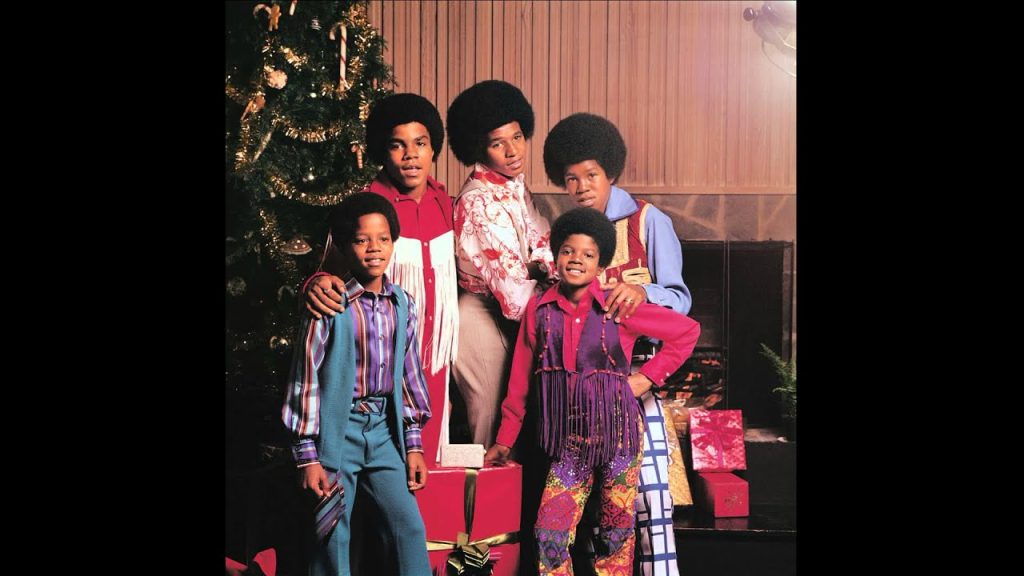
Now this song makes me question Santa and his purity shall we say. I like this song as the Christmasy bells and of course the Jackson’s voices on the song and the funny ish lyrics or though I think they weren’t meant to be humorous but I found it funny. The question is what is daddy going to do when young Micheal tells his dad what mummy was up to last night things are going to get ugly. If that was my mum I would be asking why you were kissing Santa’s Claus instead of wow mummy is kissing Santa Claus and how many wives is he going around kissing okay none of my business but I would like to know. “I Saw Mommy Kissing Santa Claus” is a Christmas song with music and lyrics by British songwriter Tommie Connor. The song has been recorded by many artists, with the most famous version being attributed to The Jackson 5. The original recording by Jimmy Boyd, recorded on July 15, 1952, when he was 13 years old, reached No. 1 on the Billboard pop singles chart in December 1952, and on the Cash Box chart at the beginning of the following year. It later reached Number 3 in the UK Charts when issued there in November 1953. The song was commissioned by Saks Fifth Avenue to promote the store’s Christmas card for the year, which featured an original sketch by artist Perry Barlow, who drew for The New Yorker for many decades. The song describes a scene where a child walks downstairs from his bedroom on Christmas Eve to see the mother kissing “Santa Claus” under the mistletoe. The lyric concludes with the child wondering how his father will react to hearing of the kiss, little knowing it is, in fact, his father in the Santa costume. Boyd’s record was condemned by the Roman Catholic Church in Boston when it was released on the grounds that it mixed kissing with Christmas. Boyd was photographed meeting with the Archdiocese to explain the song, after the meeting, the ban was lifted.
4. BOBBY HELMS - JINGLE BELL ROCK
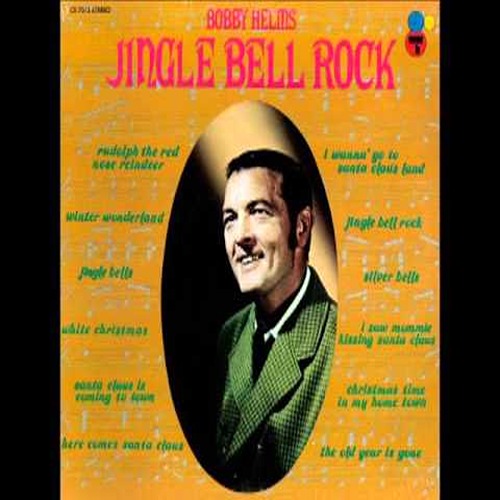
Now this song is like a step back in the past and definitely reminds me of Christmas and Home Alone 1 I think it’s Home Alone it’s off. Again the sleigh bells make it Christmasy and I like the singing by Bobby Helms. It has that old feel with the backing vocals two by the ladies which reminds me of war music sorry not sure what genre that is but it reminds me of that and I love that sort of music oddly enough. The song has been soured a bit with a ruddier remake of the song that rhymes with rock and is associated only with men I’m sure you all heard it I like it I thought it was rather funny though a bit stupid but it did sour the song a bit. It’s an American popular Christmas song first released by Bobby Helms in 1957 (after it was recorded in October of that year). It has received frequent airplay in the United States during every Christmas season since then. “Jingle Bell Rock” was composed by Joseph Carleton Beal (1900–1967) and James Ross Boothe (1917–1976.) “Jingle Bell Rock” has been performed by many, but Helms’ version is the best known. The song’s title and some of its lyrics are an extension of the old Christmas standard, “Jingle Bells”. It makes brief references to other popular songs of the 1950s, such as “Rock Around the Clock”, and mentions going to a “Jingle hop”. An electric guitar played by Hank Garland can be heard playing the first notes of the chorus of “Jingle Bells”. Backup singers were the Anita Kerr Quartet. Helms’ original version, on Decca 9-30513 from October 1957, was re-recorded by him on Kapp K-719 in 1965, and yet again in 1967 on Little Darlin’ LD-0038. In 1970, Helms recorded an entire album titled Jingle Bell Rock on Certron C-7013, releasing the title track on Certron C-10021, with a picture sleeve. He again recorded the song for Gusto Records, it was subsequently released on their “Power Pak” label. In yet another re-recording, Helms released a version on Ashley AS-4200 (year unknown). In 1983, Helms released his last recording of “Jingle Bell Rock” on Black Rose 82713.
3. BRENDA LEE - ROCKIN' AROUND THE CHRISTMAS
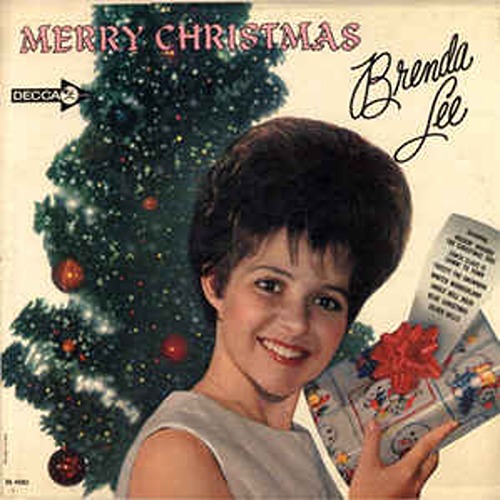
Ah, another song that reminds me of Home Alone and Christmas I think it’s that film I’m pretty sure of it. The opening guitar riff sounds like a Hawi Christmas riff which I love I instantly know the song from that intro. I like it as it’s upbeat and cheerful and is all about dancing around the Christmas tree and having a joyful time around Christmas something to get you in the festive mood. I like the when she sings “Voices singing, let’s be jolly, deck the halls with boughs of holly” a nice reference to Christmas carol Deck The Halls which if it didn’t already reinforces the Christmas feel to the song. The song is written by Johnny Marks and recorded by Brenda Lee in 1958; it has since been recorded by numerous other music artists. By the song’s 50th anniversary in 2008, Lee’s original version had sold over 25 million copies with the 4th most digital downloads sold of any Christmas single. Because of her mature-sounding voice, Lee recorded this song when she was only thirteen years old. The song’s declaration of a rock and roll sound notwithstanding, its instrumentation also fits the country music genre, which Lee more fully embraced as her career evolved. The recording features Hank Garland and Harold Bradley on guitar, Floyd Cramer on piano, Boots Randolph on sax, Bob Moore on bass, and veteran session player Buddy Harman on drums. An instrumental version of the song appears as background music in the 1964 television special Rudolph the Red-Nosed Reindeer, which exclusively featured music written by Marks. It can be heard in the scene where Rudolph first arrives at the Reindeer Games and meets another reindeer named Fireball. A fully sung version of the song would later appear in Rankin/Bass’s 1979 sequel Rudolph and Frosty’s Christmas in July. The song was also used in the 1990 film Home Alone during a scene when Kevin McCallister pretends that there is a holiday party taking place in his house, and discourages the burglars from robbing it. The song was also featured in The Christmas Special episode of Regular Show in 2012.
2. EARTHA KITT - SANTA BABY
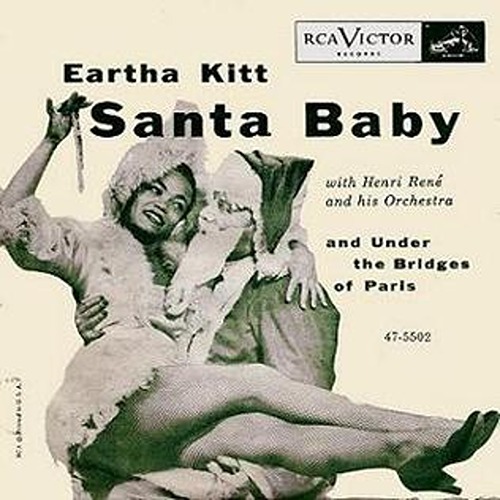
Another Christmas song I love to hear around the Christmas Holidays. All I know is she wants it and wants it tonight all the good stuff of around that time a sable fur coat, A ’54 convertible light blue of course and all the other in things around that time. I like the song as the lyrics are quite funny though if you think about it, it tells a story of a poor girl who desires all the luxuries in life but can’t afford them, I think she thinks Santa is a sugar daddy though a yacht honestly how do you expect him to get that on the back of the sleigh and those poor elves who have to make it honestly. Also, that voice is just sensual and does something to me I don’t know what it is it’s like Santa come get me voice sexy. “Santa Baby” written by Joan Javits (the niece of Senator Jacob K. Javits) and Philip Springer, sung originally by Eartha Kitt. It was originally recorded by Eartha Kitt with Henri René and his orchestra in New York City, in July 1953. It was released by RCA Victor Records as catalogue number 20-5502 (in the United States), and by EMI on the His Master’s Voice label as catalogue number B 10728. The song was a huge success for Kitt, and she later said that it was one of her favorite songs to record; she reprised it in the 1954 film New Faces. Also in 1954, Kitt recorded a new version of the song with new lyrics titled “This Year’s Santa Baby” to no commercial success; writers listed did not change. Kitt then re-recorded the original song for Kapp Records in 1963, using a more uptempo arrangement.
1. JAMES BROWN - MERRY XMAS I LOVE YOU
Now I have to admit this is more or less new to me not sure when I first heard it but I definitely love Christmas Funk songs. This song is just a joy to listen to and makes me sing along to the chorus of the song, I love backing singers as much as the lead singer some times especially with 60s and 70s music there is something too good about it it makes me rewind the song again and again and again. It’s like this song I’ve heard it many times now but still, it feels new and just straight out funky to hear. The track is off James Brown’s Sings Christmas Songs and was his thirteenth studio album and was released in November 1966, by King Records.