
Hey people it’s Synthi@ here. This is a extended page for all the things I’ve been keeping my eyes open about and is mostly Gas No Light music and stuff he has created for mainly his three websites gasnolight.co.uk, gameforexperimentation.co.uk and randomgas.com but there is also going to be other stuff as well who knows what I’ll put on the page it’s my page LOL!
Synthscape #5 – Alas No Victory

Music News – New Album; Climates Of Our Solar System
Music News
16/01/2025 - New Album; Climates Of Our Solar System

One thing that always interested me was space and the solar system that surrounds Earth it started from the early years around four to five and started with the sun watching it each morning and night rise and fall and that eerie lighting you get in the summer around six to seven o’clock. Climates Of Our Solar System is an eight-track mini album that runs alongside my interactive post called Solar Planets which goes through the eight main planets in the solar system Mercury, Venus, Earth, Mars, Jupiter, Saturn, Uranus, and Neptune with lots of information about them which I borrowed from Nasa and Wiki. I didn’t count the sun as a planet as that’s actually a star or did I do dwarf planets like Pluto the well-known dwarf planet but I kept it to the main eight planets or I’ll be there all day. I really learned a lot while putting the interactive post together and I put as much as possible with fun facts and other stuff I’ll leave a link in the button below if you are interested in learning about space and what is around you. As always I used my trusted Arturia V Collection with drums from the Mars Pack which I used a lot of the 808s drum kits as I like to use them quite a lot and were and still is a popular choice for most tracks. The tracks are also in the interactive post I made so I wanted to make something that was connected somehow so I worked it out and did climates of each planet with keywords like helium and gasses and tried to work it in the song somehow but I used the Matrix from Arturia’s V Collection quite a lot and is a go-to for spacy sounds from yesteryear and there’s quite a lot of sounds to choose from including basses, synths and pads. The first track Mercurius is about the planet Mercury which is a hot planet so I made it a summer song and something to play in the extreme weather we face. I like the vocals which represent the high volume of Helium on the planet with solar storms and harsh weather that a human just couldn’t survive on. I also like the Arp sound that goes throughout the song which gives it more of a spacy feel to or a planet in the future with the other stuff added on for luck and to make that full track. The next track Aphrodite is about Venus which is the hottest planet in the Solar System other than the sun it would out outdo Venus’s heat but as Venus is so close to the sun it gets the heat blast like Mars the neighbour planet but it absorbs the heat more as the extreme heats are easily lost on Mercury. The songs are more hot summer tracks which I used Omnisphere for this one with stuff from Arturia plugins it’s one you can have in the background when summer is here and when it’s not being dry with that weather as England has more ups and downs than two people on a seesaw. I like the chorus bit too which I think makes the song and I also like the ending to it which as always comes to a climax. The next track Terra is based on the Earth and I used a fog horn on this one as most of the Earth is made of water and is a water planet but a special water planet that’s adapted throughout the centuries to survive and make sure everything is tickadee boo. I like the first synth and its rhythm which makes it an upbeat track and something more lively and of course upbeat. The next track Mavors is about Mars and one of my upmost spacy tracks which represents its cold at night temperatures and hot blazing summers but it’s not the hottest planet out there. I like the bass the second synth that comes in before the chorus which I think makes the track. I would say it’s one of my favourites on the album as I think it could be played when you are just chilling at home or if you are doing nothing just relaxing. I also like the ending too where as always gets spun into a climax. The next track Luppiter is about the planet Jupiter and as the planets move away from the sun it gets colder so this one is a bit icy and like a winter’s day but is still kind of warm with a smile on my face. This is another favourite on the album as I like the synths over the bass which I think goes well together. I would say this is one of my overall favourites on this album and think it has something about it you will enjoy. The next track Satunus is about the planet Saturn. I imagined Saturn to be a wasteland where nothing really happens and has more Helium vocals to represent the Helium element it has on its planet. Again this is another top favourite on the album as I like the spacy deserted feel to it which I think represents the planet. I also like the ending where I bring it to a soft ending with more synths and Helium vocals. The next track Caelus is about the planet Uranus which is the coldest planet in the solar system beating its neighbour and the one furthest away from the sun Neptune. Since it’s the coldest planet in the solar system it’s a chilly track which I used Omnisphere to bring out that bare-face winter feel which I like the sound of. I like the synths and the glacier-cold wind sound which is all from Omnisphere. It’s another favourite on the album and I just like the sounds and the synth bit that is the chorus. The last track Neptunus is about the planet Neptune and is the planet furthest away from the sun so another cold and icy planet. I like the synth at the start which sounds like somewhere icy and hard to get to. I like the bass to this one too and I think goes well with the other stuff I added and yet again another favourite on the album.
New Album Release; Synthscape; Alas No Victory
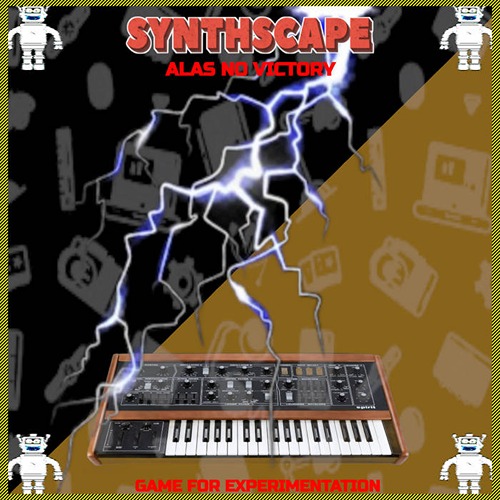
15/1/2025 - New Album Release; Synthscape; Alas No Victory
More Synthscapes and this one is number 5 and my fifth one I made so far. For those who don’t know what a Synthscape is, it’s like a Soundscape but with synths and noise which I used Audacity to chew up a mix and use that as background noise and goes on throughout the hour-long album. There are multiple versions including a Soundcloud version and a YouTube version which are an hour long with no stops in between tracks it would have been an hour-long audio and not cut up into pieces but they only allowed a certain time limit and file size to upload but it doesn’t matter it’s probably better anyway. As always I used the kitchen sink which means synth plugins from Arturia’s V collection, my own plugins I made and also stuff from Omnisphere and other synthesizer plugins like The Korg Collection. As for drums I used my own collection of drums from Mars which if you don’t know by now is a collection of all the most used drum kits of its time including Roland 808, 909, 606, Lindrum and more but I used a lot of the Roland drum kits for the drums like for the kicks, hats, snares, claps and percussions. It’s always good to go off and do something else so this is my other kind of music that I make but only now and then as it takes a lot of energy and patience by forty five mintiues in timestamp on the mix and I’m done but I keep on going getting it done as I hate to leave unfinished stuff I probably on’t even go back to it so this is why I finish everything I start or do something else.
Living My Best Life; My Journey With Music Downfalls & Success

IN THE BEGINNING THERE WAS JACK
In order to explain my journey with music, the downfalls and my success I have to rewind it right back to the start when I was only four years old. The decade was 1980 a different time, to say the least, and was still a happy non-restricted world where you can do things that you can no longer do. The UK was under suppression from the reign of Margaret Thatcher who was the UK’s Prime Minister and was the leader of the Conservative Party and for those who are not in with their UK politics, she and the party are the equivalent of the American Republican Party. She was dubbed the “Iron Lady”, a nickname that became associated with her uncompromising politics and leadership style whilst others called her Margaret Thatcher the milk snatcher after she withdrew free school milk from children over seven in 1971, earning her the nickname. In the 1980s during her time as prime minister, the Thatcher government enacted Section 28, a law that opposed the “intentional promotion” of homosexuality by local authorities and the “promotion” of the teaching of “the acceptability of homosexuality as a pretended family relationship” in schools. She did help the economy grow in uncertain times after several crashes in the market but this was all off the backs of the poor which she sanctioned quite heavily whilst making it easier for the rich to get richer. This caused quite a repression here in the UK and people were divided for and against her and the party she ran but never the less she was respected by some and kind of looked up to her as the role model of the woman-by-woman and a straight-talking get the job done lady from the men’s point of view. With so many cutbacks and taxes made directly against the low-poverty suburbs, it was the illegal rave scene that helped dampen the youth of the time’s repression and hate for her and the party she led or anyone who would be as sheepish enough to follow along and be dare I say submissive to her antics. The mid-80s was the birth of House music and the start of the illegal rave scene which started after partyers came back from Ibiza wanting to carry on with the party and what started as small events quickly grew and became large-scale operations all over the UK but abruptly came to end in 1992 when new laws came into force in respect to how loud the music should be, disbursing large crowds of partyers and confiscate equipment. This was after a few deaths after they digested pure Ecstasy or MDMA and after the newspapers kept picking up the story and running sensational headlines about the illegal parties that were taking place. The events were hosted by promoters who you would pay something like £10 to gain entry to the all-night and all-day party only ending when the crowds were too thin. During the second Summer Of Love, named after the sense of community and the atmosphere brought to mind the first Summer of Love, in 1967, when all was peace and love and was from the summer of 1988 to the summer of 1989 it wasn’t restricted and promoters could host these mostly free parties and not be trouble with the law or made their mission or even life difficult. It was the new decade of 1990 did and after so much talk from the press and the deaths of a few partygoers did they started to clamp down on such parties which ran the whole operation underground and the operation of running such parties was done in secret. To attend the party you needed to ring a mobile which was a premium number and was handed out by trusted associates who would work alongside the promoters to get the crowds in. After the clamp down it made it harder to give such numbers out leading people down fake paths, not getting the right number or not being given the right location which lost them some of their customs and following. By the end of it around 1992 when new laws came into force it became a widespread problem and people stopped looking for such parties spending their time more practically at home with loved ones, friends and family growing out the party scene. The parties were hosted on other people’s property like fields and abandoned buildings and meant loud music throughout the night and day, damage to property and drunk and drugged-up crowds and didn’t go unnoticed by the people who lived near these events. Due to the large crowds during the Second Summer Of Love, the police had no power to disburse crowds and bring down the sword on DJs, promoters and live acts who would now work against the police to host these parties. It was a different time back then and a time unlike today where people find it easier to kill the vibe back then it was about having fun and not being a party pooper so to speak even if that meant breaking the law in later years.
SUNRISE BACK TO THE FUTURE

The 12th of August 1989 which was a Saturday was one of the changing points of my life and partly made me the person I am today. It was late around 10ish at night which isn’t that late in my eyes but is for the four-year-old me. My mum caught wind of an event happening in a place called Longwick in Buckinghamshire and she really wanted to see some live acts as at some or even most events you would get some sort of live performance by underground artists who were popularised by rave culture. I have a brother older than me by a couple of years and we each used to have a babysitter to look after us while my mum went out and let her hair down. As my brother was babysat by this person and I had my own babysitter and on the pretence that I would sleep the night away it was decided that I would go with my mum to this event. The event was called Sunrise Back To The Future and was if not the biggest event the Acid House promoters Sunrise and Back To The Future put on. It was hosted on a field off the M25 (a motorway/highway junction) and brought in thousands of people on this one field to party the night away. Being in the car on the motorway/highway and seeing in the distance what I now know to be a Ferris wheel and other fairground rides I thought that was funny I didn’t know they did circus at night and was new to me. Also to explain it wasn’t just Acid House music and live acts there were bouncy castles, coffee stands, fairground rides, face painting and so much more and involved smaller businesses around the UK in order to put on the show. I remember walking through the field of the carpark and into the crowd and seeing all these people who looked aggressive but were friendly like anything which was confusing. It was also confusing seeing people on this field in dusk light due to the stage lights and other lights dotted around I really couldn’t put two and two together and was wondering what all these people were doing and being up so late or though I was four so being up in this darkness. Like my mum predicted I went back to sleep up until I was awoken by the promoter onstage who thanked the other promoters and took a five-minute breather for everyone to soak up the sunrise which was coming over the horizon and such a beautiful thing to look at. This was another turning point for me as I had never seen the sun peer over the horizon before and I started to wonder about the sun and its purpose. Thanks to UK kid’s shows like Playdays a popular children’s TV show from the 80s and early 90s I knew it was called The Sun but I didn’t know its purpose or understand the solar system but I did know or wonder that the sun was very hot due to the proximity of being close to it. The crowd clapped, cheered and whistled as we all took several glances at the new day’s sun before the live acts came on the stage to perform in front of the crowd and carry on with the party vibe which was in full swing.

The live acts were throughout the night and early morning and even had backup dancers. There was Cry Sisco who performed their house hit Afro Dizzi Act. I was asleep throughout their performance but I did see them for a minute or two before falling back to sleep again but they did their thing and got the crowd moving.

Ez-Posse now goes under the name Feral Is Kinky who did her smashing hit Everything Starts With A E. I was awake for this performance and was another groundbreaking moment as the male backup dancers were voguing on stage and my mum had the videography to Madona’s Immaculate Collection and I watched it several times so I was trying to put two and two together on what they were doing and if it was connected to that lady in the Vogue video which was always on in the background and one of my mum’s favourite Madonna’s songs at that time.

Doug Lazy who performed his bass drop anthem Let It Roll. Again another groundbreaking moment as the backup dancers who were energetic and giving some was something I had seen before in the videos but still was new to me. I think it was in one video maybe MC Hammer or someone similar but they were dancing in the New Jack form thrusting their body and acting as the hype man and woman on the stage. They even did the running man a popular 80s dance move where you stand on one spot and move your legs like you are running but to the rhythm of the beat. That was my favourite act as the bass was pumping and I enjoyed his rapping and the dancing.

And lastly, Razette who later went under the name Lamya and R.I.P. to her she was such a good artist such a shame. She sang her well-known song Ready For Love which was the female answer to Raze’s song Break For Love and sang in French but there is an English version too which I prefer as it’s less orgasmic and more singing.

Also, there were live DJs on the decks and spinning those records like the Young Carl Cox. He is a British house and techno club DJ, radio DJ and record producer He is now the Highest-Paid Techno DJ in the World with a massive $16 Million Net Worth but started from the underground DJing in clubs and illegal raves.

FLYER BOY

At the age of around seven around 1992 and with my mum after she did some successful promoting and was looking to earn some quick change I became a flyer boy. We would stand in the centre of Bristol and give out flyers and tell them where the parties were hosted which was my mum’s and other people’s job since it was now a guarded secret and not something that would be shared with you. The talent of the time included Jungle/Drum and Bass MCs The Ragga Twins, DJ Hype a well-known Jungle and Drum and Bass DJ and Producer, Jungle/Drum and Bass MCs MC Skibadee R.I.P. and MC Shabba D the duo who were always on stage with each other battling each other in a friendly manner with witty one-liners and funny punchlines and Jungle/Drum and Bass Producer and DJ Roni Size and Jungle/Drum and Bass producer and DJ Nicky Blackmarket all came down to see where they were playing next as sometimes it was so hidden not even the people on the roster knew where they were playing next and was up to the promoters and flyer boys and girls to tell them where it was going to be hosted. Even though House wasn’t meant to rival Jungle/Drum and Bass and Jungle/Drum and Bass wasn’t meant to rival House it still was brought up quite a few times the nature of Jungle which was only popular with mainstream who liked Break Hardcore a genre that spawned from the UK rave scene during the early 1990s and combines four-on-the-floor rhythms with breakbeats. They would bring up the same thing which was it wasn’t as soulful as House and lacked soul but some who liked it said it made them skip. People were more used to House and Dance music which was growing popular around the same time with the songs by Snap – Power released in 1990 and their other track Rhythm Is A Dancer released in 1992 and Nightcrawlers – Push The Feeling On which was released in 1992 and a house track. But at the time House music was being dominated by the Roland 303 Bassline which is commonly known for making Acid House so people were getting tired of the new Acid House sound even though it wasn’t that new but wasn’t as used as seen in the early 90s when Acid House grew popular and most House tracks included the Roland 303 Bassline in their tracks. The two songs that catastrophe Jungle/Drum and Bass are M-Beat featuring General Levy Incredible a Jungle track and released in 1994 and Baby D – Let Me Be Your Fantasy a Drum and Bass track and released in 1992. Both songs made both Jungle and Drum and Bass mainstream and broadened the horizon for the genres and also made it more popular to both listen to and go out raving as there was now a demand for it. Also notable is Goldie who is a Jungle/Drum and Bass producer and DJ of the early 90s when he released his timeless classic Inner City Life in 1994 people were automatically hooked due to the softness of the song is the easiest way to explain it and wasn’t like anything that was made before in both Drum and Bass or Jungle which Jungle is more harder and edgier, especially in older works but so is Drum and Bass really. Even though Inner City Life wasn’t a mainstream chart-topper it was still highly sought after and people couldn’t get enough of the soft tone just the chilling vibe it had to it making it a staple in Drum and Bass and a song that can be played without getting bored of it. But going back a few spaces now I explained some who is who’s so to speak The Firestation was the meeting point for promoters, DJs, up-and-coming artists, A&R, flyer boys and girls you name it. It was called The Firestation as you guessed it, it was once a fire station that got turned into a music studio before they moved to the outskirts of Bristol’s town which is the outskirts of a place in Bristol called St Paul’s. Meetings were held there other than a lot of business chatter and music-making and saw the UK’s top artists of the 90s underground music scene pass through. Bristol is known for its production other than its deep connection with the slave trade and the trans-Atlantic crossover so it wasn’t unusual to see out-of-towners come to Bristol to earn that paycheck or to get connected with their ancestors and has seen some top names just walking around before or after they took the launch but mainly before. The Firestation was no exception and there was always someone famous or about to launch and become famous or was about to make it big time and bring home the fish supper so I was custom to seeing all sorts of people and plus my dad worked for a council and was always at some sort of do so I knew how to be professional. One thing I enjoyed whilst giving out the flyers is looking at the cool graphics they would print on them and made me decide to do something in graphic design when I got older. The picture seen above of the Fantazia New Year’s Party was one I gave out and used to give me the creeps as the highlighter light to the eyes with the cut-off forehead and blank stare really gave me the willies but was my favourite flyer I saw and gave me the idea of becoming a graphic designer.
MUSIC MAKER (PART 1)

As I probably told you in past posts and in my bio of all my socials I learned how to play the piano and keyboard when I was 6-7 when my gran who is an awesome keyboardist and organist taught me how to play. My first keyboard was a portable Casio before my fingers got flexible and I moved on to the piano. I also took piano lessons when I was taken on by a trained piano teacher who taught me warm-ups, scales and playing passages. I spent a lot of time at the Firestation where I used to hang around there during the weekends and also do the flyer round which by nine years old I was doing on my own. They were always so friendly and made me feel welcome but despite this, I felt like the third wheel as when I was just hanging around I was doing nothing and added nothing to the equation like all the people I saw there. This led me to leap into action by being a little helper around the studio and doing my bit to contribute but this still wasn’t enough. For whatever reason which I can’t remember I felt I had to prove myself and I so wanted to play on all the keyboards they had but never dared to just walk up to one and start playing not with the heavy eyes of the crowd who wasn’t saying anything at all and was me being silly. I used to go home and play Incredible and play notes on my Casio mastering the one trick pony playing one or two keys played repetitively over the rhythm of the beat and also coming up with my own house patterns. I also spent time writing songs and raps which I was getting very good at by the time I was seven. The big day came when I finally could prove myself when I blurted out I could play the keyboard as it wasn’t something I mentioned I also told them how I was practising with different songs and rhythms. I also told them how I could play a certain pattern to which they replied go on then. Nervous as now I had a whole crowd looking at me and I used to hate when people stared at you or breathed down your neck which is something they never did. I got on the keyboard and began to play the pattern to which they had nothing but good things to say and started to see my potential immediately after that. Then onwards I used to go there to play on the many keyboards and what started as a little joke of me playing their songs for them or contributing mostly turned into me being allowed to add my own input which included playing the keyboard and songwriting. I was also good at finding the right melody in vocals which is something I’m still good at. Kele Le Roc is a British R’n’B and UK Garage singer who is best known for her UK Garage song she did with Sticky a UK Garage producer Things We Do For Love my favourite UK Garage track and her more famous song here in the UK that you might know if you are into your UK Garage, My Love. UK Garage is part of the rave scene and started early 1990s when the genre started to evolve into what we now recognise as UK garage and speed garage. This evolution occurred when DJs like DJ EZ and DJ Sneak took the original Chicago house sound and combined it with the more aggressive and harder-edged sounds of Detroit techno. Kele was at the Firestation and on the outskirts of town quite a lot and helped make the sound of UK Garage by coming up with melodies and other counterparts for their signature sound and using her voice and what I would call callbacks repeating what the person sang like or tones. At the time I was practising my arpeggios a type of broken chord in which the notes that compose a chord are individually sounded in a progressive rising or descending order. She liked how it sounded and asked for a recording or it might have been me playing and recording it as my young nimble fingers could glide over the keys nowadays I’m clumsy and I was also fast. The recording and it’s not clear to me if it’s the exact same copy I recorded it doesn’t matter but that later on became part of her most famous UK Garage song called My Love. For this, I got some credit and some street cred and gave me the courage I needed to be more vocal about things and what they said which was basically don’t suffer in silence and never listen to the hating ass skinny bitches which is something I took on all the way to my adult life and beyond.
ALGORITHIMS

Before 1998 before my own bump with the internet, I used to go to the library and rent books. I was heavily into computers and it used to amaze me the things you can do with computers although they were still limited. I’d tune into computer shows on TV and get all the facts since I wanted to be a graphic designer or by now work on computers for some fancy high-tech company. I picked up the scent of algorithms after discovering it in an old clip from the 70s where he’s on a computer playing with algorithms. The thought of it being an untouched territory and something you could use with your own voice and music really excited me and had me down to the library in no time to rent some books on algorithms. I really was schooled and learnt a lot even getting a big tip-off from one book which I can’t remember what it was now but whatever it was it’s a dud by nowadays standards. Before I knew it I was a mini algorithm specialist and was tipping the artists to get to grips with algorithms as one day when the algorithm takes over computers and the world their music will be left in the dust. A quick lesson on algorithms they are a set of instructions you give to the computer in order to get some sort of response from it. The more higher the excitement the more it will give out which is how you play the algorithm game. Also by feeding it information like who you are or who your favourite Hollywood star, rapper, singer etc etc is the computer ranks the person in the hierarchy of popularity and gives out a score. That score determines where you are in the popularity hierarchy and rewards you by flushing IE and is the reason why you play the algorithm game promote you by putting you higher up in the search engine for example. The computer knows one thing and that is legendary due to the fact that and after the rise of the internet that person say Michael Jackson got x amount of clicks and was for example through the roof that person must be popular so let’s see what else we can found about him. The computer spends months looking for the best example and the biggest achievements and if it does find something for example Michael Jackson doing the Moonwalk it will scan it and make a copy but also bump them up ten notches as you are now a friend of the computer since you both can work together to a mutual agreement and it thinking you are just like it. The other thing to note and something I discussed heavily with the stars is that in order to get some points you must be known to the computer and you can’t have that one song that blows up or a viral video and get recognized it takes painstaking tasks you feed your computer or algorithm to let it know who you are and how popular you are. This takes a lot of explaining or alternatively, you pick stuff you know the algorithm will like and hopefully do a backend check on you to see where you fit in all this. Shocking the algorithm by picking up how many hateful comments, dislikes or you just have the wrong mould of the body or part of the body could mean being switched off and the algorithm picking someone else it’s been eying up behind your back. It’s quite a judgemental and hateful process and if you mess with it it will start to mess with you.
CHILDREN'S TV

I took a job as a cleaner for the hotel chain Holiday Inn when I was 16 after working in The Royal Marriott hotel as a conference and banquette under work experience but was a part-time thing. My main duties as a cleaner for the Holiday Inn were cleaning toilets, cleaning the gym, cleaning the corridors, reception area everywhere but the rooms they had chamber maids for that. I worked there for about a year before I quit but I quickly got back on the horse when I went to the library to use their computers and sign up for an agency which was taking people for TV work around the realm. I didn’t think they would take me as I had no experience in TV work and was losing my confidence every day that passed but long and behold I was accepted and got my first job in Kid’s TV and thereafter in several well-known kids’ shows like Sooty And Sweep which was a right laugh and if you could understand poor Sue trauma. For those who don’t know Sue is a panda and babysitter to the troublesome twins Sooty and Sweep who are not twins Sooty is a yellow bear and Sweep is a dog but are twins as they are so alike. In order to bribe them and to what she thinks will stop them from becoming so hyperactive she gives them a bottle of pop each but every time it backfires and they torment her with certain antics like pieing her or making a terrible mess. Being a Panda known for their anger she gets enraged and she locks them in the basement where she takes a nap and tries to calm down but always forgets about them and leaves them in there for hours at a time. One day she has enough and hires extra help from a nanny who she knows Sooty and Sweep will be the demise of him but is desperate and not to be a burden to her boyfriend when she gets home which you never get to see her at home or her boyfriend. This was all backstory that the makers made up for a bit of fun in the board room and was to bring a bit of adultness into the work field. Working for the TV show Sooty And Sweep was a messy affair and involved cream, water, goo and a lot of other things that I used to stink of going home on the bus but was so funny and fun. I used to be stuck in a small cramped box where I would do multiple tasks while they recorded but was close to the action. I was in the box as I was hidden from the camera’s view and controlled certain things like levers that I would pull. I also worked on shows like The Tweenies, The Fimbles and Topsy Turvy and oh I got the weave for Rosie from CITV’s Rosie And Jim, I told her curly is in she wanted that European hair I was like next she be going strawberry blonde next she’s ginger.
MEETING THE QUEEN

During the time at the agency the Queen or the Queen’s Staff put out a royal invitation to well there was a whole list actually but one of them was calling up the puppeteers a person who controls a puppet to make it appear alive. I had just finished working loosely as a puppeteer under agency work and the director liked how I played the puppet which was loose which is how they like it may I add and was part of the finished product of the show and got ending credits rights my name in the ending credits. Also in my early days, I worked for a man I can’t remember his name but he used to run the Punch & Judy Show a puppet show alongside the sea fronts as it’s an English seaside tradition. He too liked the way I handled the puppets and after the show and whilst putting them away I would have a quick go messing about with them. He taught me certain things like how to manuva my arm and fingers for maximum effect and do things like how to hold an object in the hand of the puppet and how to catch the baby the infamous line Punch uses as he tosses the baby in the air or sorry thrusts the baby in the air. He taught me everything and took me on the road for day trips to sea sides and other places to perform the Punch & Judy show. Thinking about it in the letter with the royal stamp and everything they were looking for people who could perform the Punch & Judy Show and I knew just the person so I took the job to him tracking him down which was the hardest part. He was so happy when I told him he had a royal appointment and I didn’t think I was going to go as I was looking for the next job the agency would give me. But he asked me to come along which I couldn’t refuse as 1. It was a great opportunity and 2. He asked me along and I was kind of privileged for him to ask me since how professional he was and have been doing it for decades now. We went to Glouster where the show was meant to be for one of the royal’s children but they were a no-show. Also to explain we already set it up and were ready to go and the no-show meant there was no one to entertain. But guess who came walking through the door requesting us to carry on with the show the queen. This made both of us feel nervous but doing as we were told and not to waste the time we spent setting it up we carried on and put on the show exclusively to the queen who was the only person apart from us behind the curtain in the room. She enjoyed it laughing at the jokes and even said “Oh no you didn’t” after the “Oh yes I did” line one of us gave and is a back and forth between the crowd and Punch sometimes Judy. That and the fact she requested us to carry on with the show shows showmanship and also showed me a different side to the queen I quickly glanced in the looking mirror and saw a nice kind old woman.
AMERICAN UNIVERSTY

Knowing enough about algorithms and being guided by my peers who I look up to I signed up for Harvard University to study algorithms and computer design. They told me so much about the university and one of the attributes which I liked they make leaders who make a difference globally. I actually signed up a couple of years before but never heard anything back from them until around a year or two before September 11th. I flew out not so long after they contacted me after they told me I could be placed on their campus I just had to fly out and see if it was for me and sign the papers. When September 11th happened in 2001 I thought my career was over and I never get to study abroad as planned. In case you are wondering why didn’t I just go to Oxford or Yale well Harvards specialized in Algorithms but especially computer design and none of the other universities had that and I fancied the idea of studying somewhere new and where I could concentrate the most and not be distracted. Plus I saw the ad on TV after the university was heavily discussed by my peers so I grew to fall in love with the university and them being this university that could change your life and damn it did it change my life. Not only did I study algorithms, a bit of psychology and some after-class classes like how to make the perfect drum pattern hard things to do back then and were also knowledgeable and insightful. I walked away with my own algorithm which is all that I explained already but just to recap it was based on old findings that to get some excitement out of the algorithm it had to be legendary and each person or thing gets marked out of points which is ranked and sometimes rewarded if it gets a high reading. Also and most importantly I joined a cause and helped give back to the earth which is something I enjoy doing. My algorithm was partnered with Charities around the globe to make my own impact and is something I am proud to say. My mind is foggy so I can’t remember but I distinctly remember being in a sermon with a black guy who I remember him saying he wanted to become the first black president of America it could have been Barack Obama. For those who don’t know and aren’t American Harvard’s is infernus of having powerful leaders of tomorrow do talks about issues and their own missions to give insight and so you can feel inspired and go on to make your own path of light. Other people, I could have sworn I saw there was Comedian and actor Pete Davidson and the spitting image of female rapper Erica Banks who I believe is her cousin since she was studying management and public relations liaison and said she had a cousin who she was going set up for life but was still very young. Just looked it up Erica was born in 1998 which means if true she would have been four when that conversation happened but I don’t even know if is the same female rapper I was on the hunt for but nonetheless I love and rate her.
SOUND PICKER
Thanks to my time at Harvard they found me a placement with the gaming company Rockstar. Now I don’t need to explain who Rockstar is but just for reference, they made the Grand Theft Auto series as well as Manhunt, Red Dead Redemption, Bully, Max Payne, The Warriors and L. A Noire. Because I now wanted to do something in music, games or computer design they phoned up Rockstar and asked if I could join their team with a placement that was initially a year internship. Around two years before I worked with Rockstar I saw an ad in the black newspaper The Voice which said something like do I like and know my music, are you into computer designing and do I want to become part of the team. I answered yes to all of them and liked the idea of working as a team and something I like to do a lot. So two years before I worked for Rockstar as part-time hours around 5 days per week I answered an ad in a newspaper and didn’t hear anything back from them and wasn’t until I went to Havard that they phoned after the studying bit was over and meant you had to practise then did I got accepted. As I said it was originally an internship but they already knew who I was after going through my application and realising my potential for the knowledge of songs and tastes did they put me to work as a sound picker. My duties were organizing songs and files in order of gameplay but also organizing files into the yes and no piles the yes pile contained all the songs that could be allowed to be used in the game and getting the copywrite owner permission to agree to them using their song or songs in some cases in their gameplay. The no pile were the ones that were refused to use in the gameplay and were never used. Other duties also included playing and organizing songs into categories so the sound development team could play them back and work and find out if they could get the rights and if they could will it sound good in the game, picking the best songs that represented the gameplay and its surroundings. The office was in Warwickshire here in the UK which is 88 miles away, and the journey takes approximately 1 hour and 34 minutes from Bristol. Due to this, I would sleep in a hotel that was paid for and go back on the weekends only to do it all again Monday morning. The project was a secret project in which I had to sign contracts that said I couldn’t talk about any of what I saw or to speak to competitors which was True Crime in this case a Grand Theft Auto rip-off game. It lasted for two years on and off doing one year then coming back 6 months later to do some more work before the games were finished and the makers could sit in the shade for a bit hence how the work dried up. Not only that I was on a mission as they would say so I couldn’t hang around all day and pick and sort music I had places to be which they were aware of and were quite supportive of. Like all the previous places I worked or was at all the people were nice and again a right laugh I was constantly laughing as someone was making jokes and I met some of the characters from the game who were also quite friendly and a laugh to be around same with the development team they were the funniest. I can’t remember what number I was working on but quickly it was getting such a rotten response by mainstream media although it was also getting good reviews. It was unclear to me the knock-on effect of the side effects of the game as it does insights breaking into cars and stealing them at the lower level but on the higher level insights murder which as I said was unheard of even in the 2000s when it grew popular. The fact you could stab someone to death, run someone over until you kill them or even attack people with baseball bats was insight violence and not something I wanted to stick my name to or though after it became the norm and there was no suggestion of it crime rate like knife crime and baseball attacks going up I wanted in and felt more comfortable or though I wasn’t that bad just a bit weary of dire consequences.
MUSIC MAKER (PART 2)

Explaining who is in the UK underground scene comes near the end of my musical journey and to the next bit of the power walk I did. Thanks to the time at the Firestation and the outskirts of Bristol town where I became more intertwined with making music and the relationship I grew with my peers also playing the keyboard for Kele Le Roc and Roni Size a Bristol-based Jungle/Drum and Bass artist from the 90s to present day and like all the Jungle/Drum and Bass acts that are still thankfully here still make guest appearances on stage and doing their own podcast and other podcasts with mix sets and interviews they are still chucka blocked being all pioners of Jungle/Drum and Bass and Kele Le Roc being a pioneer of UK Garage. But thanks to Kele Le Roc and Roni Size after playing on their tracks but they all get a shout as they all helped me along the way every last one of them as I was the growing star and associated with my time being a flyer boy of mostly Jungle/Drum and Bass events but some House and Hardcore as well and also being associated with the Sunrise event all roads led to Rome and riches. My music was evolving and I was always trying something out usually with a tape cassette which meant some of my best work came out over-saturated and leading to a muffle of sound which wasn’t good so I gave that up and just recorded the sounds and it sounded better. I was bursting with ideas and had a lot of different ideas that were and weren’t linked to the music I made but some were master plans that were ruined by change of law, change of perception or change of the internet. So basically thanks to all that and the fact I worked damn hard and helped a lot of people along the way they suggested I should go to America again and work as what is called in the music industry a dummy but to put in a more non slangy word a music assistant. My duties were playing the keyboard over half-finished songs or coming up with suggestions on what or what would make them sound better, and testing music, writing lyrics and song arranging for different groups of people when I was assigned to work with them. Oh the bit I missed out it was known I was the child from Sunrise by most people who knew me or of me in and around Bristol after being spotted with the local talent who came to Bristol who also knew because either I told them or my mum did. In the quick interview where they asked me a few questions and one of them was an unknown name to me for Sunrise Back To The Future which threw everybody off including myself. This led me to be embarrassed as one person was already ushering me to the door whilst calling me in his own words a charlatan and expressing how he’s done with the frauds no joke. This led me to confess I never heard of the word before and was actually from Chicago. Oh, this is now in America on the outskirts of Hollywood on the safer bit of Hollywood LA. I was surprised how quickly came down after I confessed I didn’t know the slang term and went on to prove it by telling him something that only a person there would have seen and known unless you paid whatever the price it was to get the exclusive recorded footage that was recorded throughout the rave event from start to finish but my mum never got the video due to it becoming unpopular in the press and mainstream Britain I think. Also to mention the neighbouring label which was just a stone thrown away literally down the corridor the record company Atlantic Records owned some offices and studios within the same compound of the record company we were on which I can’t remember what it was called now I would like to say Ant Records but that may be incorrect but it ran alongside Defected Records the giant House label or I worked with Defected Artists to come up with something like song lyrics and I wrote a lot of songs over the time I was there and working with them. Do you know how many famous artists I saw just walking around in the corridors it was quite a few Toni Braxton comes to mind who I briefly passed and her on-fire publicist who was putting out the word out that Toni’s vocals were for sale which means giving you the rights to some of her most famous song acapella versions. One was sold to someone in our section of the offices and studio the artist and track Shadow Child – So High which uses one of my favourite Toni Braxton songs apart from Freeway but the Toni Braxton song was called You’re Making Me High if you didn’t guess what the song title was from the Shadow Child title. The main artist I worked with is Dusky a House producer and like all good House and Jungle/Drum and Bass producers he’s also a DJ. I worked with him on finishing unfinished tracks, and coming up with melodies on the keyboard. testing music to an unknown audience in a place like Times Square and coming up with one-liners for others to record and use in his works, it was fun but nerve-wracking at times especially testing the music on the unsuspected audience. I remember playing What I Never Knew first Dusky’s dark but melodic track and then a couple of days later to change the past a little I played Nobody Else to people who were just walking by getting on with whatever they were doing I did feel like a lemon but not by the content I was an outside me being English and everyone around me as nearly American so I felt like I stood out plus I had to carry this small but heavy and loudspeaker that would blast the music so I was essentially making myself a target or that’s what it felt like. But it ended up alright as the music being played got a good response and after a while, I grew used to having to be the centre of attention even though that’s not me at all. I was paired with several Defected artists and other artists on the label I was working for but was really under Defected if I remember correctly. The track Dummy by Dusky apparently was named after my job after I expressed concerns even laughing at times that one was going to believe my roll sheet and especially that I helped make the tracks so he kindly agreed to name one of his songs after my job of being a dummy. The pay was good and they had so many benefits to go alongside the pay and could save you a bit of money and there were always opportunities which is the next bit.
MUSIC MAKER (PART 3)

The next thing that came my way started around 1996 when I was when I was 11 and I was sent on my first quest. There was news given to me by my peers that there was a new genre of rave music was in its first process and Supa D a DJ was looking for people to help with the final process of playing the keyboard and coming up with melodies and test lyrics to test the styles of vocals used on the track. The quest as told by my peers meant flying out to somewhere in Spain I think it was Majorca to hunt for this DJ and sign up for the program which is what they are called or one name for it. But there was one trouble I was only 11 and Majorca never was the choice destination when my dad went on holiday and as he pointed out he was too busy working to go on a silly quest that he thought was going nowhere and I don’t blame him for that. I came up with the solution of me flying out to Majorca on this one-off mini holiday/quest at first he opposed to the idea and full out told me to stop going on about it. But the more I explained this was my payout and my chance to shine it was like he could see what I was saying and in the end he said yes I could but only once which I was and still am grateful for that. Flying out to Majorca with friends from my secondary school Fairfield Grammar where I found the bar eventually after a couple of days and tries and it felt at times like I wasted my time. Someone gave me the name of the bar and street name which I jotted down beforehand which I found the bar after finding the correct street name and bar name which is why they call it a quest as it’s a hunt for something and a proper estursion. The next bit was a bit tricky as I didn’t just walk up to him and say hi such and such I hung back in the crowd and I was unsure if it was him or not so I thought I double check before I made the error of judgment. For whatever reason he might have seen me count beats as I always had a habit of working out what BPM they were using for that track that was playing and to do that you count beats in the song and work it out that way and I had a cheat sheet of doing much quicker and more importantly, more accurately which worked so it was always fun to do. After I went through several BPM check tests he waved me over and greeted me and welcomed me along. He explained that I wasn’t needed just yet and the final tests wouldn’t be until around 2003 and this was in 1996 so I was relieved not to be turned down for being too young being eleven at the time. Fast forward to the end of the last chapter, it was 2003 and as I waved goodbye or saw the end of my time with the record company I was under and Defected which as the well was drying up and I lost the original team I started with I felt isolated and alone and knew I wasn’t going to last due to my ongoing mental health problems and at times was making it worse plus the excessive of drinking and going out till late only having to be up early in the morning, stresses of workload as it was quite demanding I knew I had to quit quite soon anyway it was only part-time solutions. I came across Supa D again either back in the UK or over in America I really can’t remember but he said it was ready to be tested and the Bristol base was already in the process of starting testing so I began to test keyboards over tribal beats over the next couple of months also working the BPM range from fastest to slowest.
LAUNCH PARTY

Around April 2004 there was the launch party for the new rave genre UK Funky which ended successfully and with tracks to follow in and upcoming years to follow the launch was to celebrate the making of the nearly 10-year project that apparently didn’t go without any hiccups along the way like getting the beat to sit on top of the mix and the tribal bongo drum would lose its sharpness losing it’s distinct sound along the way. The launch party was held at my current address and a flat I have lived in since I was nearly 18 and I’m 40 in March. What started as a bit of music playing loudly and with a few people loitering outside later turned into a sea of people covering a football field of people. The launch party just one of many was held at my flat to prove to the haters what I was doing and also the windows were a one sheet that you could slide all the way back apparently it was a good choice to host a party with the speakers and sound system that wouldn’t smash the window. It was on the verge of new laws coming in that dealt with how many people could gather or the licence you needed to host such parties so it was lucky really that it happened. It was hosted by the record company I was working for and saw some big names come down to this party after I gave out an invitation to them as an RSVP something I did not think they would take the invitation but they did and I was blown away by who was just hanging around in my living room and outside my flat. Thanks to the outputs of my internet connection they were able to hook up the sound system and a direct feed to Hollywood which meant live feeds were able to happen and also gadgets from the record company like the monitors and lights were put up there were also cables running downstairs from my living room where is where the sound system was and the speaker’s which was rested near the windows. It got busy at about noon where it brought quite a big crowd some people were just passing and saw what was going on and pulled up their cars to come and party and some people were on their way to work but pulled a sickie. It also brought all my neighbours out who couldn’t believe what was happening and who they were seeing it was so funny. I was hosting so I was making sure everyone was having a good time and they had a drink in their hand because there was a lot of alcohol just lying around and was paid for by the record company which meant free drinks for everyone and as much as you could drink which was nice. The party lasted until the next day around sometime in the morning when it died down and people were getting tired it was decided to call it a day and we packed up. It also brought all the A&R staff and artists and also some well-known DJs did a set so there were a lot of well-known people there. It was if not the best party I went to and I really can’t forget it in a hurry I still can’t believe it was hosted in my flat.
END OF ERA
Unfortunately due to my mental health and the ever-growing changes I had to give it all up and settle for a more chilled life where down the years I forgot about all the stuff I had done and it wasn’t until more recent years did I remembered which got me back on music making. I did all these things whilst battling with my mental health and up until that point was manageable. It was either keep going and working for the record company which was demanding and full throttle or try and recover from past stresses and I chose my health over money which I kind of regret to this day but I’m happy with what I did and know I had to give it a rest at some point or be driven to the ground. Most of it was done in secret and was something I didn’t tell that many people as they would always hate and think less of me or say I was lying which was the main theme throughout my rise and fall. It was a different time back then and in the world, due to bass what others would call the rave scene there was a land of opportunities and being in the right circle meant I had access to those opportunities which I am thankful to have had. Nowadays those opportunities are gone and with the rise of the internet a different world to say the 90s and early 2000s in how you went about getting seen and heard. People would speculate about what I did and if you didn’t know about things like promoting a good way to get your foot in the door they wouldn’t know how easy it was to get those opportunities and how it built me up to my own success but of course came with the haters and naysayers who would say I was too young or even too stupid to get such opportunities but that never bothered me as I knew what I did and had the proof it laid in myself and to know they were just jealous of me and knew what I as doing but the hate was real.
Top 10 Nostalgic Retro Games
INTRODUCTION
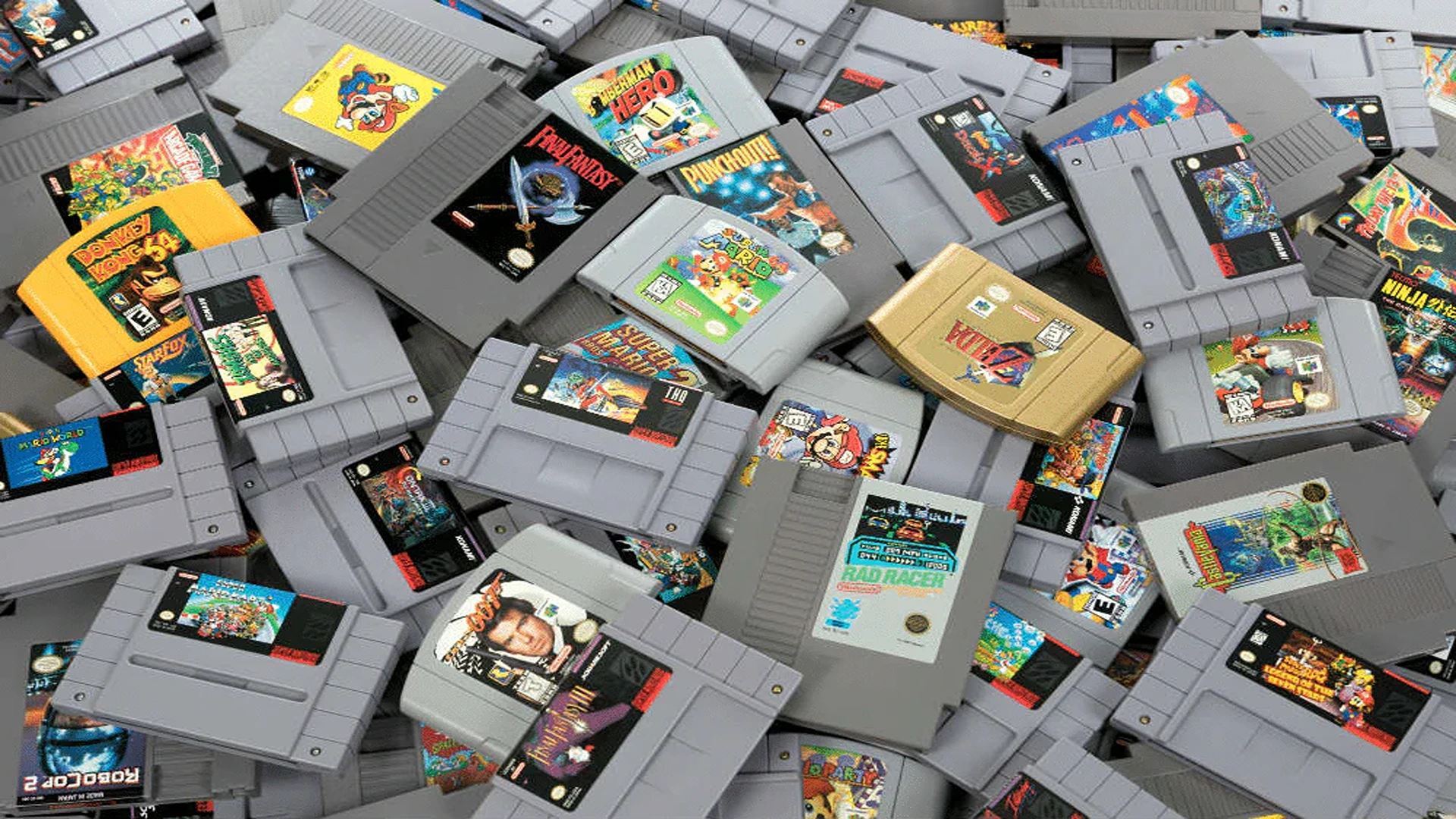
The 80s and 90s were the start of the gaming revolution although games like Pacman, Mr Doo, Centipede, Frogger, Astroids, and of course, Tetris and so many others paved the way for developers to start their own ventures in the gaming industry. The introduction of 8-bit processors in the 1970s enabled the production of personal computers, leading to the popularization of computing and setting the foundation for the modern computing landscape. The 1976 Zilog Z80, one of the most popular 8-bit CPUs (though with 4-bit ALU, at least in the original), was discontinued in 2024. On almost all modern computers, a byte is equal to 8 bits. Large amounts of memory are indicated in terms of kilobytes, megabytes, and gigabytes. A disk that can hold 1.44 megabytes, for example, is capable of storing approximately 1.4 million characters, or about 3,000 pages of information. This was a big thing and development in gaming as before that to add storage onto a computer which the space on the computer was limited you had to carry packs around with you and is similar to what Elon Musk was carrying the thing that looks like a sink and stores everything he unrolled in the new reform of X formally known as Twitter. They were heavy and bulky and took computer knowledge to install and they were also expensive not everyone could afford the luxury of extra space or a person to install it if you can’t do it yourself. So when 8-bit was invented originally intended for the Datapoint 2200 intelligent terminal (a computer terminal) in 1972 it opened the doors to better graphics and more space for things like music to the games. In the history of video games, the third generation of video game consoles, commonly referred to as the 8-bit era, began on July 15, 1983, with the Japanese release of two systems: Nintendo’s Family Computer (commonly abbreviated to Famicom) and Sega’s SG-1000. When the Famicom was released outside of Japan, it was remodelled and marketed as the Nintendo Entertainment System (NES). This generation marked the end of the video game crash of 1983, and a shift in the dominance of home video game manufacturers from the United States to Japan. Handheld consoles were not a major part of this generation; the Game & Watch line from Nintendo (which started in 1980) and the Milton Bradley Microvision (which came out in 1979) that were sold at the time are both considered part of the previous generation due to hardware typical of the second generation. Improvements in technology gave consoles of this generation improved graphical and sound capabilities, comparable to Golden Age arcade games. The number of simultaneous colours on screen and the palette size both increased which, along with larger resolutions, more sprites on screen, and more advanced scrolling and pseudo-3D effects, which allowed developers to create scenes with more detail and animation. Audio technology improved and gave consoles the ability to produce a greater variation and range of sound. A notable innovation of this generation was the inclusion of cartridges with onboard memory and batteries to allow users to save their progress in a game, with Nintendo’s The Legend of Zelda introducing the technology to the worldwide market. This innovation allowed for much more expansive gaming worlds and in-depth storytelling since users could now save their progress rather than having to start each gaming session at the beginning. By the next generation, the capability to save games could be found everywhere at first saving on the game cartridge itself and, later, when the industry changed to read-only optical disks, on memory cards, hard disk drives, and eventually cloud storage. The best-selling console of this generation was the NES/Famicom from Nintendo, followed by the Master System from Sega (the successor to the SG-1000), and the Atari 7800. Although the previous generation of consoles had also used 8-bit processors, it was at the end of the third generation that home consoles were first labelled and marketed by their “bits”. This also came into fashion as fourth-generation 16-bit systems like the Sega Genesis were marketed to differentiate between the generations. In Japan and North America, this generation was primarily dominated by the Famicom/NES, while the Master System dominated the Brazilian market, with the combined markets of Europe being more balanced in overall sales between the two main systems. The end of the third generation was marked by the emergence of 16-bit systems of the fourth generation and with the discontinuation of the Famicom on September 25, 2003. However, in some cases, the third generation still lives on as dedicated console units still use hardware from the Famicom specification, such as the VT02/VT03 and OneBus hardware. The era of 8-bit graphics is seemingly over. With the popularity of modern graphics and gameplay dominating the market, there seems no need for an archaic graphics style. However, even though we’re in 2024 8-bit graphics are still going strong. The emergence of fifth-generation video game consoles, beginning around 1994, did not significantly diminish the popularity of fourth-generation consoles for a few years. In 1996, however, there was a major drop in sales of hardware from this generation and a dwindling number of software publishers supporting fourth-generation systems, which together led to a drop in software sales in subsequent years. The first handheld game console released in the fourth generation was the Game Boy, on April 21, 1989. It went on to dominate handheld sales by an extremely large margin, despite featuring an 8-bit microprocessor and a low-contrast, unlit monochrome screen while all three of its leading competitors had colour. Three major franchises made their debut on the Game Boy: Tetris, the Game Boy’s killer application; Pokémon; and Kirby. With some design (Game Boy Pocket, Game Boy Light) and hardware (Game Boy Color) changes, it continued in production in some form until 2008, enjoying a better than 18-year run.
#10 DONKEY KONG COUNTRY
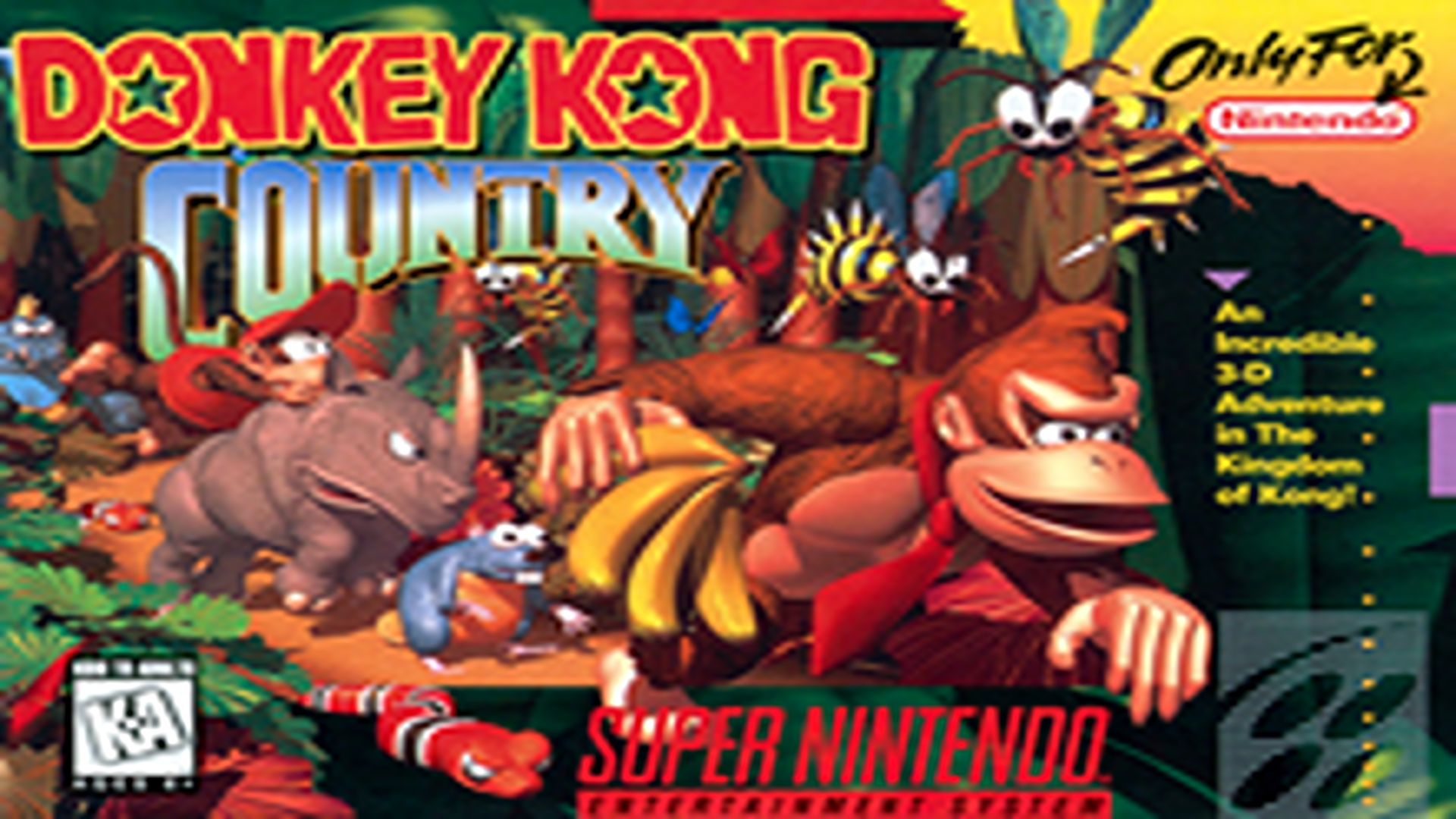
Released in 1994 and as a reboot of Nintendo’s Donkey Kong franchise and to compete with Sega’s Aladdin (1993) it was commissioned by Rare to revive the dormant Donkey Kong franchise. It was a side-scrolling game with two characters Kong and Diddy who you could swap characters and play at any point. The soundtrack to the game was different from anything that came before it and instead of using an 8-bit chip to compose the music David Wise who composed most of the soundtrack chose samples and optimised the music to work on the SNES’s SPC700 sound chip. Donkey Kong Country features atmospheric music that mixes natural environmental sounds with prominent melodic and percussive accompaniments. Its soundtrack attempts to evoke the environments and includes music from levels set in Africa-inspired jungles, caverns, oceanic reefs, frozen landscapes, and industrial factories. This was different from the 8-bit aggressively loud and violet sounds that came before it especially seen in the Golden Era of arcade game music. 8-bit music, also known as chiptune, uses basic waveforms like sine, square, triangle, and noise. These waveforms are generated by oscillators in virtual synthesizers. In 1994, at the dawn of 32-bit consoles, Donkey Kong Country blew away the competition with its pre-rendered 3D graphics, cartoon-quality animation and atmospheric music on the 16-bit Super Nintendo. The soundtrack grew quite popular with one track in mind “Aquatic Ambience” (also written as “Aquatic Ambiance”) and was part of the underwater level. The track has gone on to be part of nostalgic memories and a track that has been favourited and talked about quite a lot over the years cementing its place as one of the best gaming soundtracks of all time.
#9 PRINCE OF PERSIA
THE SANDS OF TIME
Released in 2003 and released on the Game Boy Advance, PlayStation 2, GameCube, Xbox and Windows in November 2003. The action-adventure game received critical acclaim, being nominated for and winning numerous awards and has been recognized by many as one of the greatest video games ever made. Sales of the title were initially slow, but it eventually became a commercial success. Its success prompted the development of a sequel, Prince of Persia: Warrior Within, which was released in November 2004. Further games set in the Sands of Time continuity have been developed, and Sands of Time is generally cited as the reason for the Prince of Persia series’ return to fame. As of 2014, the game has sold over 14 million copies worldwide, across all platforms. A remake was announced to be in development in 2020 and, following some delays, is currently scheduled for 2026. Prince of Persia: The Sands of Time is an action-adventure puzzle-platformer. The player controls the main protagonist, an unnamed Prince from a kingdom in Persia. Environments are seen through a controllable third-person view. The camera’s view changes to different positions triggered by entering certain areas or performing actions. The Prince can be moved in all directions, and he can manipulate large objects such as blocks and levers connected to mechanisms. His health and power meter are represented in the top left-hand corner of the screen. The Prince restores health by drinking water from pools and fountains; total loss of health from injuries by traps or enemies results in a game over. Collecting Sands increases the Prince’s power, and drinking from hidden magic fountains increases the Prince’s maximum health. During several points in the game, the Prince is assisted by his companion Farah, controlled by artificial intelligence, who fires a bow at enemies, though her arrows can also hit the Prince if he strays into her line of fire. Monsters will attack her, and if she is killed, the game also ends. The game was unique as it was the first popular game to run up and across walls in a free-running manner and has been copied by games like Assassins Creed and Mirror’s Edge which use the same free-running in their games. Like Assassins Creed and Mirror’s Edge, it uses a lot of acrobatics in which you jump run and swing out of the danger zones like drops to your death or the good old spike impalement or other trap machinery.
#8 SUPER MARIO WORLD
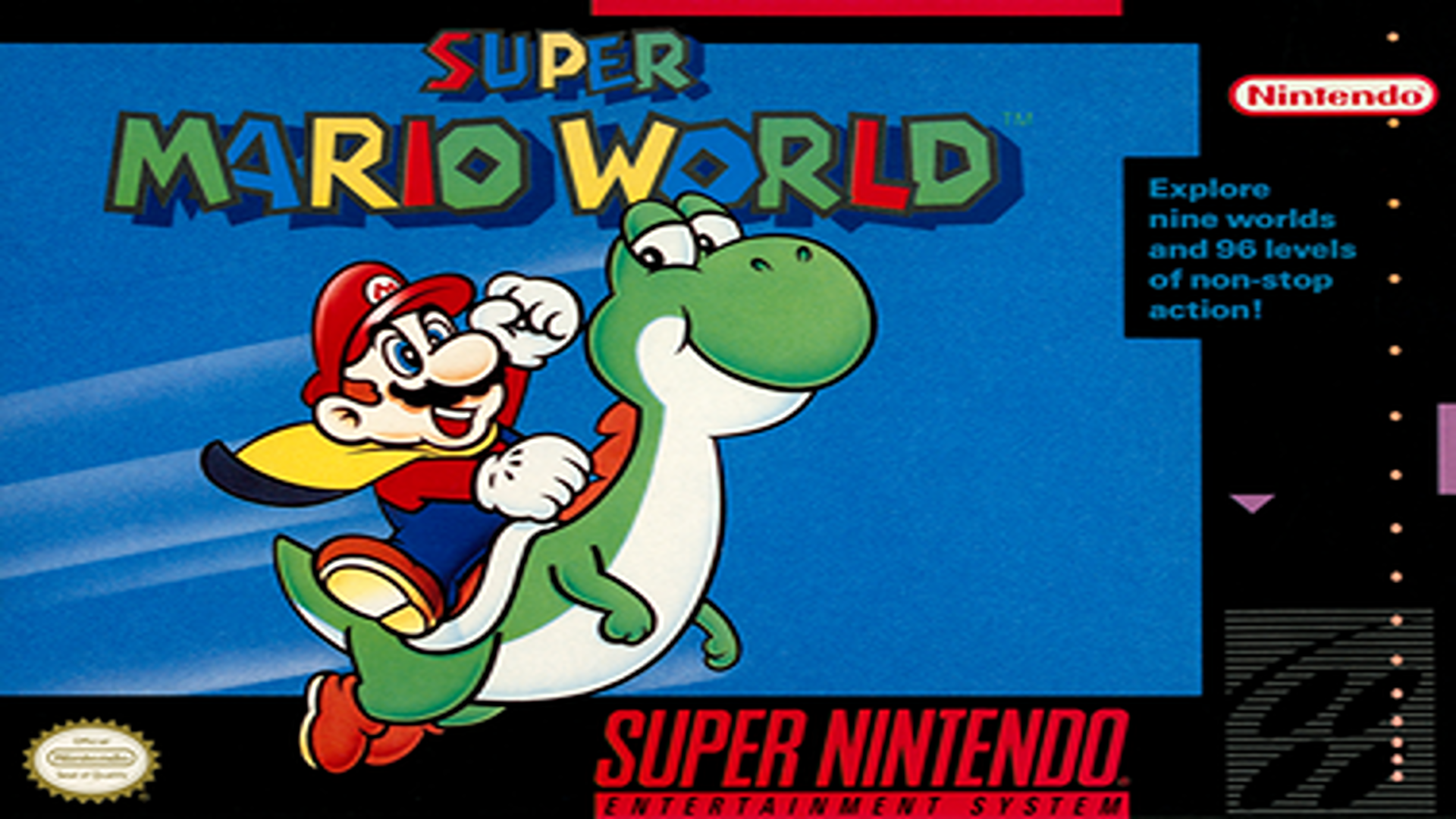
It was released in 1990 and is a platform game developed by Nintendo EAD and published by Nintendo for the Super Nintendo Entertainment System (SNES). The player controls Mario on his quest to save Princess Peach and Dinosaur Land from the series’ antagonist Bowser and the Koopalings. The gameplay is similar to that of earlier Super Mario games; players control Mario through a series of levels in which the goal is to reach the goalpost at the end. Super Mario World introduces Yoshi, a ridable dinosaur who can eat enemies. Nintendo Entertainment Analysis & Development developed the game, led by director Takashi Tezuka and producer and series creator Shigeru Miyamoto. It is the first Mario game for the SNES and was designed to make the most of the console’s technical features. The development team had more freedom compared to the series instalments for the Nintendo Entertainment System (NES). Yoshi was conceptualised during the development of the NES games but was not used until Super Mario World due to hardware limitations. Super Mario World is often considered one of the best games in the series and is cited as one of the greatest video games ever made. It sold more than twenty million copies worldwide, making it the best-selling SNES game. It also led to an animated television series of the same name and a 1995 sequel, Yoshi’s Island. The game has been re-released on multiple occasions: It was part of the 1994 compilation Super Mario All-Stars + Super Mario World for the SNES and was re-released for the Game Boy Advance as Super Mario World: Super Mario Advance 2 in 2001, on the Virtual Console for the Wii, Wii U, and New Nintendo 3DS consoles, and as part of the Super NES Classic Edition. In 2019, it was released for Nintendo Switch Online as part of the classic games service. Super Mario World is a 2D side-scrolling platform game in which the player controls Mario or Luigi, the protagonists of the game. The game has similar gameplay to earlier games in the Super Mario series – Super Mario Bros., Super Mario Bros. 2, and Super Mario Bros. 3 – but introduces new elements. As well as dashing and jumping, the player can also fly or float with the aid of the Cape Feather and P-Balloon and can execute the new Spin Jump move which allows the player to crush enemies, bounce off normally invulnerable ones safely or break certain blocks, with the latter only being possible if the player has a power-up active. The game has 96 level exits in total. The game was directed by Takashi Tezuka, while Shigeru Miyamoto, the creator of both Super Mario and The Legend of Zelda, served as producer. Shigefumi Hino took the role of graphics designer. Nintendo Entertainment Analysis & Development handled development with a team of ten people, including three main programmers and a character designer, most of whom had worked on past Super Mario titles. In a retrospective interview, the core team said Miyamoto wielded the most authority during development. Super Mario World was the first Mario series game developed for the then-upcoming Super Nintendo Entertainment System (SNES). As such, the team anticipated some difficulty in working with new and more advanced hardware. According to Tezuka, the software tools were not yet fully developed, and the team had to “go along with starting something new”. Miyamoto acknowledged the team no longer had restrictions on certain mechanics such as scrolling and the number of colours they could implement. As a hardware experiment, the team ported Super Mario Bros. 3 to the SNES. However, it felt like the same game to them, despite the improved colours and sprites. After that, Miyamoto realised the team’s goal would be to use the new hardware to create something “totally new”. Super Mario World was produced during the console wars as a result of the rivalry between Nintendo’s SNES and Sega’s two-year-old Mega Drive system – which outsold the console and led to intense competition between the two, being the first time since December 1985 Nintendo did not lead the market though it eventually overtook Sega. Sega’s mascot, Sonic the Hedgehog, was seen by many as a faster and “cooler” alternative to Mario. After the game’s release, Miyamoto admitted publicly he felt it was incomplete and development was rushed toward the end. Super Mario World was first released in Japan on 21 November 1990 under the name Super Mario World: Super Mario Bros. 4. It was one of two launch games for the SNES in Japan, along with F-Zero. The game was released in North America on 23 August 1991. Nintendo also issued a version for arcade cabinets so players could try the game before buying it.
#7 MANHUNT
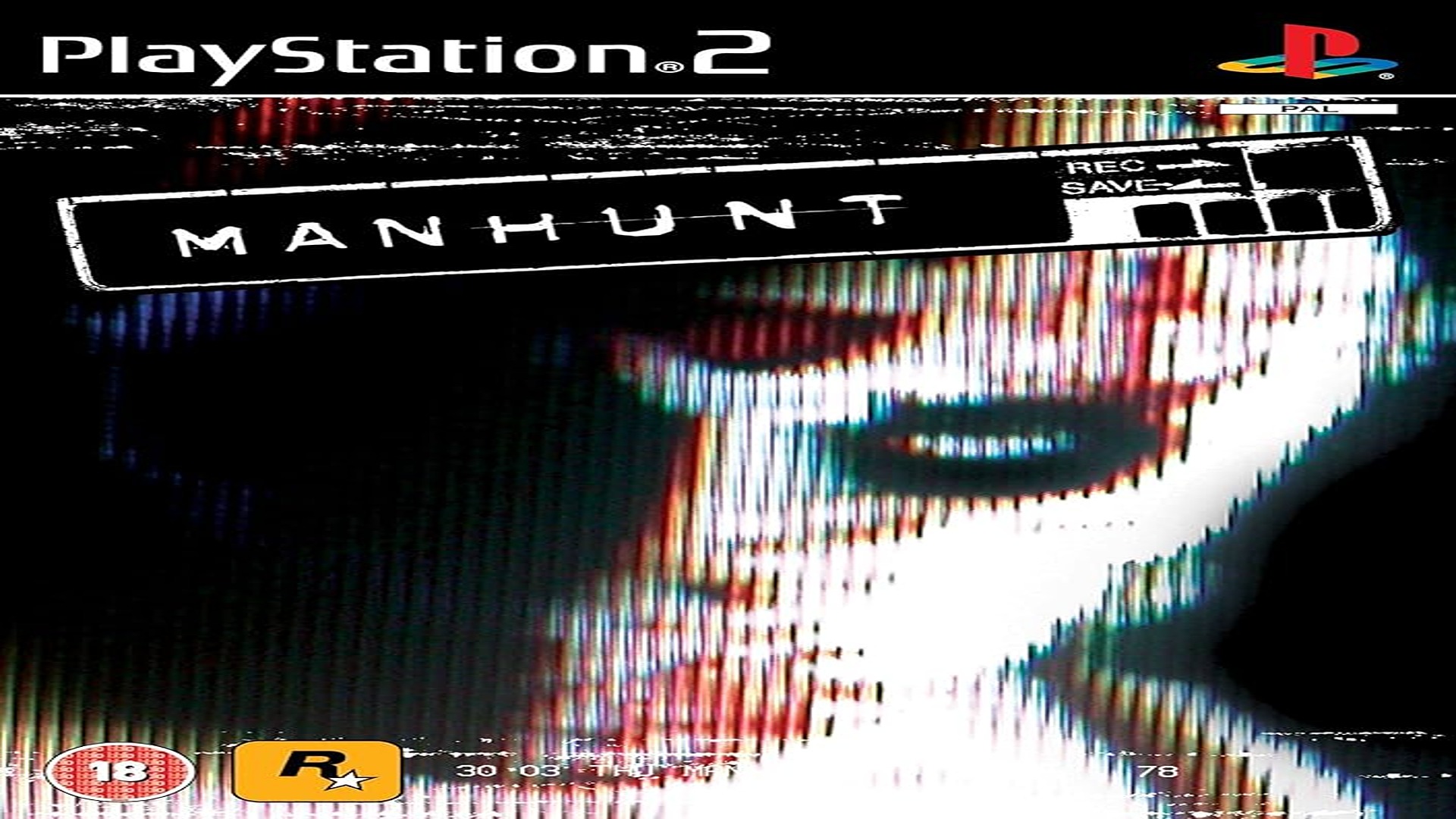
Released for the PlayStation 2 in November 2003, followed by Microsoft Windows and Xbox releases in April 2004 and is set within the fictional Carcer City, and is a stealth game developed by Rockstar North and published by Rockstar Games. It follows a death row inmate who is forced to participate in a series of snuff films by killing criminal gang members sent to hunt him on camera. The game received positive reviews from critics, with praise towards its dark tone and violent gameplay, although the combat and level design were criticized. Due to its graphic violence, Manhunt was subject to a significant video game controversy and banned in several countries. It was also implicated in a murder by the UK media, although this accusation was later rejected by the police and courts. While not a commercial hit, Manhunt developed a substantial cult following and was followed by a stand-alone sequel, Manhunt 2, in 2007. The game was re-released through the PlayStation Network for the PlayStation 3 in 2013 and PlayStation 4 in 2016. Manhunt is a stealth game played from a third-person perspective. The game consists of twenty levels, called “scenes”, as well as four unlockable bonus scenes. Players survive the scenes by dispatching enemy gang members, occasionally with firearms, but primarily by stealthily executing them. At the end of each scene, players are graded based on their performance and awarded one to five stars. Unlockable content becomes available when the player achieves three or more stars on a certain number of levels. On normal difficulty (called “Fetish”), players can earn only four stars; one is awarded for completing the scene under a certain amount of time, and one to three stars are awarded based on the brutality of the executions carried out during the scene. On hard difficulty (called “Hardcore”), players are graded out of five stars; one for speed, one to three for brutality and one for completing the scene. To gain the maximum number of stars, a set number of brutal executions must be carried out throughout each scene; face-to-face fighting does not award stars. To carry out executions, players must approach a hunter from behind, undetected. To facilitate this, each scene is full of “dark spots”, shadows where the player can hide. Enemies cannot see into the shadows unless they see the player actually entering the area. A standard technique in the game is to hide in the shadows and tap a wall to attract the attention of a nearby hunter. When the hunter has examined the area and is moving away, players can easily ambush and execute them. The game has three levels of execution, with each level progressively more violent and graphic than the last: “hasty” executions are quick and not very bloody, “violent” are considerably more gory, and “gruesome” are over-the-top blood-soaked murders. Players are in control of which level they use; once players have locked onto an enemy, the lock-on reticule changes colour over time to indicate the three levels: white, yellow and red. Over the course of the game, players can use a wide variety of weapons, including plastic bags, baseball bats, crowbars and a variety of bladed items. Later in the game firearms are available for use when executions become impractical. Should players take damage, their health depletes; health can be restored through the use of painkillers, which are available throughout each scene. Players have a stamina meter which depletes as they sprint but automatically replenishes when remaining stationaryThe controversy surrounding the game stems primarily from the graphic manner in which the player executes enemies. In 2007, former Rockstar employee Jeff Williams revealed that even the game’s staff were somewhat uncomfortable about the level of violence; “there was almost a mutiny at the company over that game.” Williams explained that the game “just made us all feel icky. It was all about the violence, and it was realistic violence. We all knew there was no way we could explain away that game. There was no way to rationalize it. We were crossing a line.” The violence in the game drew the attention of U.S. Representative Joe Baca, who was the sponsor of legislation to fine those who sell adult-themed games to players younger than 17. Baca said of Manhunt, “It’s telling kids how to kill someone, and it uses vicious, sadistic and cruel methods to kill”. The media was drawn into the debate. For example, The Globe and Mail wrote “Manhunt is a venal disconnect for the genre. There’s no challenge, just assembly-line, ritualistic slaughter. It’s less a video game and more a weapon of personal destruction. This is about stacking bodies. Perhaps the scariest fact of all: Manhunt is so user-friendly that any sharp 12-year-old could navigate through the entire game in one sitting. Working for Rockstar as a sound picker around the same time Manhunt was released in 2002 – 2003 I distinctively remember saying how “icky” they felt whilst in Development of the game and at the time got quite a thrashing but in the same breathe got some good reviews and was a game that was to follow Metal Gear Solid another stealth game that was first released in 1987 but didn’t get popular until 1998 when it was released on PlayStation 1 and apart from Crash Bandicoot was the most popular game on PlayStation 1 of the time. The game is one big snuff movie which is why it got so heavily criticised and apart from the army games which by the way weren’t as popular as present-time but the style of the game was new and as I said before apart from the army games most games were cutesie so to speak and designed for kids. I think Mortal Kombat changed that with their blood thirst graphics and killer finishing moves which was designed to have you jumping out your seat but this is my own theory from my own knowledge and experience of gaming throughout the years.
#6 ALEX THE KIDD MIRACLE WORLD
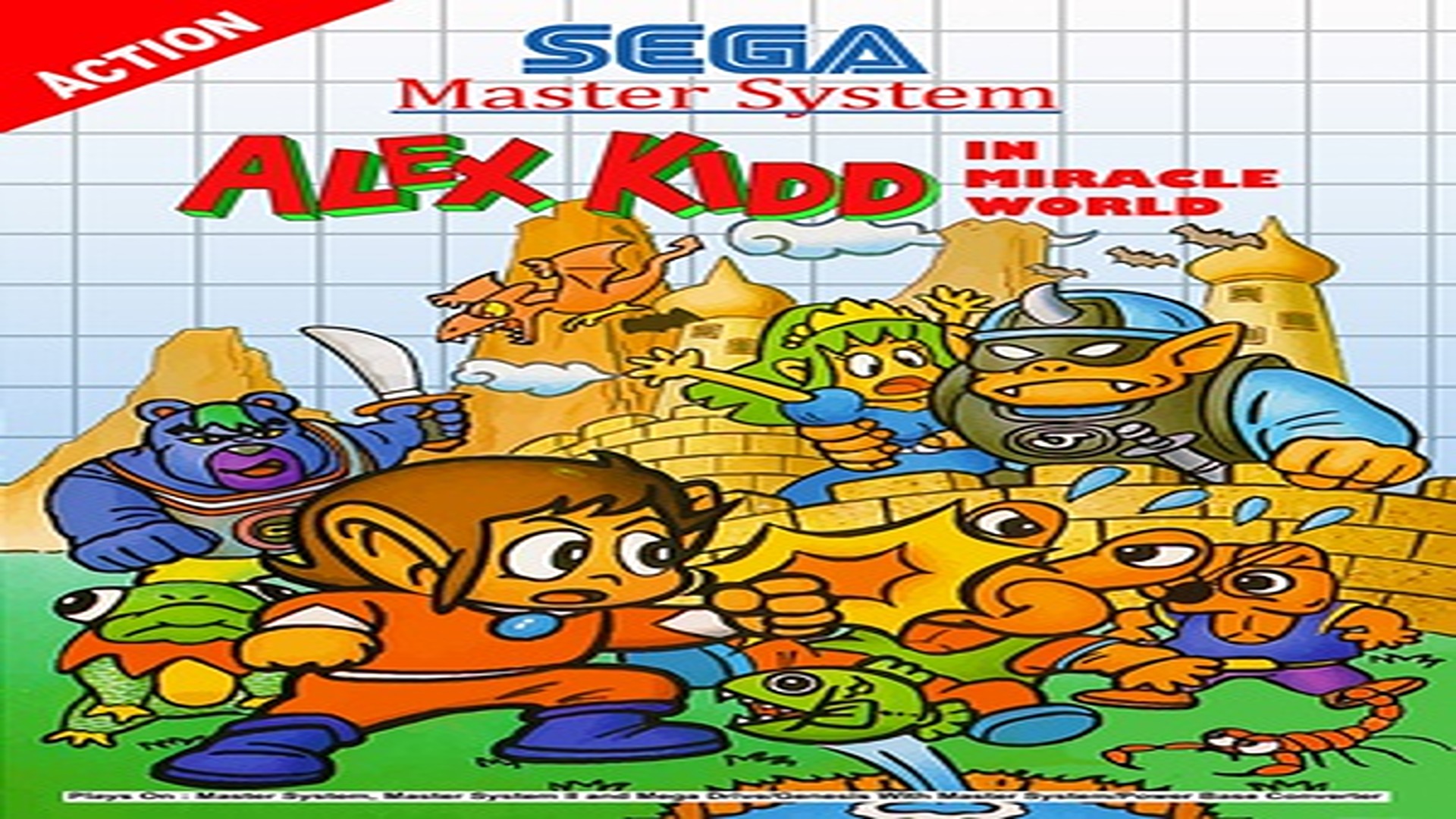
Released in Japan on November 1, 1986, followed by North America in December 1986, with Europe in September 1987, plus South Korea in October 1988, and Brazil in 1989. It was later built into many Master System and Master System II consoles. A remake by Merge Games and Jankenteam, titled Alex Kidd in Miracle World DX, was released on June 22, 2021. Alex Kidd in Miracle World is a 2D platform game. The player must finish levels and overcome obstacles and puzzles in both scrolling and single-screen environments. Throughout the 17 stages, Alex faces many monsters and the three henchmen of Janken the Great, before facing Janken himself. Alex’s punching ability is used to destroy enemies and to break rocks to access new paths and to collect items such as money which can then be used to purchase other items including vehicles such as motorbikes and helicopters. At the end of many stages, Alex plays jan-ken-pon (rock-paper-scissors) with one of Janken’s henchmen. Alex dies with one hit, or by losing a game of rock, paper, scissors. The game has no save system, but by holding the directional pad up and pressing the 2 button eight times at the Game Over screen, the player will restart the level with three new lives, for 400 Baums (the in-game currency). Alex Kidd in Miracle World originally began development in 1984 as a licensed tie-in game based on the Dragon Ball manga series. However, during development, the Dragon Ball license expired and Sega CEO Hayao Nakayama ordered the developers to start the game over from scratch. The game was originally only available as a cartridge but was later built into many editions of both the Master System and the Master System II power base, enabling play without the use of a game cartridge. From 1990 onwards, a slightly different version was integrated into the US, Australian and European versions of the Master System II and also some Australian and European versions of the original Master System. There were two differences: firstly when changing targets in the game map, Alex is shown eating onigiri in the original version (and the 2008 Wii Virtual Console port), and a hamburger in the integrated version. Secondly, the original version used button 2 to hit and button 1 to jump; these controls were inverted in the integrated version.
The game was released alongside Super Hang-On and The Revenge of Shinobi as part of Sega Vintage Collection: Alex Kidd and Co., which was released for Xbox Live Arcade and PlayStation Network in May 2012. This version allows play of any region version of the game (the European version retaining a 50 Hz framerate) and the Master System II variation. The original version is included in the At Games Sega Genesis Flashback HD compilation, a dedicated console with games from the Sega Genesis, Master System, and Game Gear. The game has been critically acclaimed since its release. In 1987, the French magazine Génération 4 gave the game a highly positive score. In 1991, Sega Pro magazine stated that, with “so much to do and so many different ways of doing it, this is one of those games you will keep coming back to even when you have finished it completely.” Computer and Video Games magazine in 1991 described the game as “Sega’s answer to Mario” and concluded that the “absorbing gameplay will have you glued to your screen for hours on end.” In a 2008 retro review, IGN gave Alex Kidd a score of 9 out of 10 and an “Editor’s Choice” award, calling it “an exceptional platformer with loads of action and some great puzzle-solving challenges” that “still holds up remarkably well.” IGN also gave the Wii Virtual Console release a score of 9 out of 10. A remake of the game, titled Alex Kidd in Miracle World DX, was announced on June 10, 2020, and released on June 22, 2021. The game is developed by Merge Games and Jankenteam for Nintendo Switch, PlayStation 4, PlayStation 5, Windows (Steam), Xbox One, and Xbox Series X/S. The remake features new levels, new NPCs, and alternate boss fights, and can instantly change between modern or retro-style graphics by using the right trigger button. Once the player completes the game, the player unlocks two additional modes: Classic Mode, which is an upscaled Master System port of the original game, and Boss Rush, where the player must defeat all the bosses at Rock Paper Scissors and follow-up battle without dying.
#5 STREET FIGHTER II
THE WORLD WARRIOR

It was released in 1991 fighting game developed and published by Capcom for arcades. It is the second instalment in the Street Fighter series and the sequel to 1987’s Street Fighter. It is the fourteenth game to use Capcom’s CP System arcade system board. Street Fighter II vastly improved many of the concepts introduced in the first game, including the use of special command-based moves, a combo system, a six-button configuration, and a wider selection of playable characters, each with a unique fighting style. Designed by Yoshiki Okamoto and Akira Yasuda, who had previously worked on Final Fight, Street Fighter II is regarded as one of the greatest video games of all time and the most important and influential fighting game ever made. Its launch is seen as a revolutionary moment within its genre, credited with popularizing the fighting genre during the 1990s and inspiring other producers to create their own fighting series. Additionally, it prolonged the survival of the declining video game arcade business market by stimulating business and driving the fighting game genre. It prominently features a popular two-player mode that obligates direct, human-to-human competitive play, inspiring grassroots tournament events, culminating in the Evolution Championship Series (EVO). Street Fighter II shifted the arcade competitive dynamic from achieving personal-best high scores to head-to-head competition, including large groups. Street Fighter II became the best-selling game since the golden age of arcade video games. By 1994, it had been played by an estimated 25 million people in the United States alone. More than 200,000 arcade cabinets and 15 million software units of all versions of Street Fighter II have been sold worldwide, grossing an estimated $10 billion in total revenue, making it one of the top three highest-grossing video games of all time as of 2017 and the best-selling fighting game until 2019. More than 6.3 million SNES cartridges of Street Fighter II were sold, making it Capcom’s best-selling single software game for the next two decades, its best-selling game on a single platform, and the highest-selling third-party game on the SNES. Due to its major success, a series of updated versions were released with additional features and characters, starting with 1992’s Street Fighter II: Champion Edition; its major successor was Street Fighter III in 1997. Street Fighter II follows several conventions and rules established by its 1987 predecessor Street Fighter. The player engages opponents in a series of timed one-on-one, close-quarters combat matches. To win a round, the player must either completely drain the opponent’s health bar by landing attacks, or have more health left than the opponent when the timer runs out. Neither fighter wins the round if they have equal health when the time expires or if they simultaneously knock each other out. The first fighter to win two rounds is declared the victor of the match. While a single-player game is in progress, a second player may join at any time, immediately starting a head-to-head match. The winner continues in single-player mode. The original Street Fighter II allowed up to 10 rounds per match; this maximum is reduced to four rounds starting with Champion Edition. If there is no clear winner by the end of the final round, either the computer-controlled opponent will win by default in a single-player match or both fighters will lose in a two-player match. After every third match in the single-player mode, a bonus stage gives a chance to earn additional points by smashing a car, wooden barrels, or metal oil drums. After each match, the location for the next one is selected on a world map.
Like in Street Fighter, the controls are an eight-directional joystick and six attack buttons. The joystick can jump, crouch, walk left and right, and block. A tradeoff of strength and speed is given by three punch buttons and three kick buttons, each of light, medium, and heavy. The player can perform a variety of basic moves in any position, including new grabbing and throwing attacks. Special moves are performed by combinations of directional and button-based commands. The leader of the Shadaloo organization, M. Bison, in his global domination plan, sets up a world fighting tournament, to select the best fighters to work in his Shadaloo organization through brainwashing. Although the original punching-pad cabinet of Street Fighter was not been very popular, the alternate six-button version was more successful, which began to generate interest in a sequel. Capcom began to make fighting games a priority after Final Fight was commercially successful in the United States. Yoshiki Okamoto recounted: “The basic idea at Capcom was to revive Street Fighter, a good game concept, to make it a better-playing arcade game. Development of Street Fighter II took about two years and about 35 to 40 people, with Noritaka Funamizu as a producer, and Akira Nishitani and Akira Yasuda in charge of the game and character design, respectively. The budget was estimated at $2,450,000 (equivalent to $5,480,000 in 2023.)
#4 PACMAN
Pac-Man, originally called Puck Man in Japan, is a 1980 maze video game developed and released by Namco for arcades. In North America, the game was released by Midway Manufacturing as part of its licensing agreement with Namco America. The player controls Pac-Man, who must eat all the dots inside an enclosed maze while avoiding four coloured ghosts. Eating large flashing dots called “Power Pellets” causes the ghosts to temporarily turn blue, allowing Pac-Man to eat them for bonus points. Game development began in early 1979, directed by Toru Iwatani with a nine-man team. Iwatani wanted to create a game that could appeal to women as well as men because most video games of the time had themes of war or sports. Although the inspiration for the Pac-Man character was the image of a pizza with a slice removed, Iwatani has said he rounded out the Japanese character for the mouth, kuchi (Japanese: 口). The in-game characters were made to be cute and colourful to appeal to younger players. The original Japanese title of Puck Man was derived from the Japanese phrase paku paku taberu, which refers to gobbling something up; the title was changed to Pac-Man for the North American release. Pac-Man was a widespread critical and commercial success, leading to several sequels, merchandise, and two television series, as well as a hit single, “Pac-Man Fever”, by Buckner & Garcia. The character of Pac-Man has become the official mascot of Bandai Namco Entertainment. The game remains one of the highest-grossing and best-selling games, generating more than $14 billion in revenue (as of 2016) and 43 million units in sales combined, and has an enduring commercial and cultural legacy, commonly listed as one of the greatest video games of all time. Pac-Man is an action maze chase video game; the player controls the eponymous character through an enclosed maze. The objective of the game is to eat all of the dots placed in the maze while avoiding four coloured ghosts—Blinky (red), Pinky (pink), Inky (cyan), and Clyde (orange)—who pursue Pac-Man. When Pac-Man eats all of the dots, the player advances to the next level. Levels are indicated by fruit icons at the bottom of the screen. In between levels are short cutscenes featuring Pac-Man and Blinky in humorous, comical situations. If Pac-Man is caught by a ghost, he loses a life; the game ends when all lives are lost. Each of the four ghosts has its own unique artificial intelligence (A.I.), or “personality”: Blinky gives direct chase to Pac-Man; Pinky and Inky try to position themselves in front of Pac-Man, usually by cornering him; and Clyde switches between chasing Pac-Man and fleeing from him. Placed near the four corners of the maze are large flashing “energizers” or “power pellets”. When Pac-Man eats one, the ghosts turn blue with a dizzied expression and reverse direction. Pac-Man can eat blue ghosts for bonus points; when a ghost is eaten, its eyes make their way back to the centre box in the maze, where the ghost “regenerates” and resumes its normal activity. Eating multiple blue ghosts in succession increases their point value. After a certain amount of time, blue-coloured ghosts flash white before turning back into their normal forms. Eating a certain number of dots in a level causes a bonus item—usually a fruit—to appear underneath the centre box; the item can be eaten for bonus points. To the sides of the maze are two “warp tunnels”, which allow Pac-Man and the ghosts to travel to the opposite side of the screen. Ghosts become slower when entering and exiting these tunnels. The game increases in difficulty as the player progresses: the ghosts become faster, and the energizers’ effect decreases in duration, eventually disappearing entirely. An integer overflow causes the 256th level to load improperly, rendering it impossible to complete. This is known as a kill screen. Upon its North American debut at AMOA 1980, the game initially received a mild response. Play Meter magazine previewed the game and called it “a cute game which appears to grow on players, something which cute games are not prone to do,” saying that there’s “more to the game than at first appears” but criticized the sound as a drawback, saying it is “good for a while, then becomes annoying.” Upon release, the game exceeded expectations with wide critical and commercial success. When it was first released in Japan, Pac-Man was initially only a modest success; Namco’s own Galaxian (1979) had quickly outdone the game in popularity because its predominately male player base was familiar with its shooting gameplay as opposed to Pac-Man’s cute characters and maze-chase theme. Pac-Man eventually became very successful in Japan, where it went on to be Japan’s highest-grossing arcade game of 1980 according to the annual Game Machine charts, dethroning Space Invaders (1978) which had topped the annual charts for two years in a row and leading to a shift in the Japanese market away from space shooters towards action games featuring comical characters. Pac-Man was Japan’s fourth highest-grossing arcade game of 1981. Pac-Man In North America, Midway had limited expectations before release, initially manufacturing 5,000 units for the US, before it caught on upon release there. Some arcades purchased entire rows of Pac-Man cabinets. It became a nationwide success. Upon release in 1980, it was earning about $8.1 million per week in the United States. Within one year, more than 100,000 arcade units had been sold which grossed more than $1 billion in quarters. It overtook Atari’s Asteroids (1979) as the best-selling arcade game in the country and surpassed the film Star Wars (1977) with more than $1 billion in revenue. Pac-Man was the United States’ highest-grossing arcade game of 1981 and second highest game of 1982. By 1982, it was estimated to have had 30 million active players across the United States. The game’s success was partly driven by its popularity among female audiences, becoming “the first commercial videogame to involve large numbers of women as players” according to Midway’s Stan Jarocki, with Pac-Man being the favourite coin-op game among female gamers through 1982. Among the nine arcade games covered by How to Win Video Games (1982), Pac-Man was the only one with females accounting for a majority of players. The number of arcade units sold had tripled to 400,000 by 1982, receiving an estimated total of between seven billion coins and $6 billion. In a 1983 interview, Nakamura said that though he did expect Pac-Man to be successful, “I never thought it would be this big.” Pac-Man is the best-selling arcade game of all time, with total estimated earnings ranging from 10 billion coins and $3.5 billion ($7.7 billion adjusted for inflation) to $6 billion ($19 billion adjusted for inflation) in arcades. Pac-Man and Ms. Pac-Man also topped the US RePlay cocktail arcade cabinet charts for 23 months, from February 1982 through 1983 up until February 1984. The Atari 2600 version of the game sold over 8 million copies, making it the console’s best-selling title. In addition, Coleco’s tabletop mini-arcade unit sold over 1.5 million units in 1982, the Pac-Man Nelsonic Game Watch sold more than 500,000 units the same year, the Family Computer (Famicom) version and its 2004 Game Boy Advance re-release sold a combined 598,000 copies in Japan, the Atari 5200 version sold 35,011 cartridges between 1986 and 1988, the Atari 8-bit computer version sold 42,359 copies in 1986 and 1990, Thunder Mountain’s 1986 budget release for home computers received a Diamond certification from the Software Publishers Association in 1989 for selling over 500,000 copies, and mobile phone ports have sold over 30 million paid downloads as of 2010. II Computing also listed the Atarisoft port tenth on the magazine’s list of top Apple II games as of late 1985, based on sales and market-share data. As of 2016, all versions of Pac-Man are estimated to have grossed a total of more than $12 billion in revenue. Pac-Man is considered by many to be one of the most influential video games of all time. The game established the maze chase game genre, was the first video game to make use of power-ups, and the individual ghosts have deterministic artificial intelligence (AI) that reacts to player actions. Pac-Man is considered one of the first video games to have demonstrated the potential of characters in the medium; its title character was the first original gaming mascot, it increased the appeal of video games with female audiences, and it was gaming’s first broad licensing success. It is often cited as the first game with cutscenes (in the form of brief comical interludes about Pac-Man and Blinky chasing each other),: 2 though actually Space Invaders Part II employed a similar style of between-level intermissions in 1979. Pac-Man was a turning point for the arcade video game industry, which had previously been dominated by space shoot ’em ups since Space Invaders (1978). Pac-Man popularized a genre of “character-led” action games, leading to a wave of character action games involving player characters in 1981, such as Nintendo’s prototypical platform game Donkey Kong, Konami’s Frogger and Universal Entertainment’s Lady Bug. Pac-Man was one of the first popular non-shooting action games, defining key elements of the genre such as “parallel visual processing” which requires simultaneously keeping track of multiple entities, including the player’s location, the enemies, and the energizers. Maze games became popular on home computers after the release of Pac-Man. Some of them appeared before official ports and garnered more attention from consumers, and sometimes lawyers, as a result. These include Taxman (1981) and Snack Attack (1982) for the Apple II, Jawbreaker (1981) for the Atari 8-bit computers, Scarfman (1981) for the TRS-80, and K.C. Munchkin! (1981) for the Odyssey². Namco produced several other maze games, including Rally-X (1980), Dig Dug (1982), Exvania (1992), and Tinkle Pit (1994). Atari sued Philips for creating K.C. Munchkin in the case Atari, Inc. v. North American Philips Consumer Electronics Corp., leading to Munchkin being pulled from store shelves under court order. No major competitors emerged to challenge Pac-Man in the maze subgenre. Pac-Man inspired 3D variants of the concept, such as Monster Maze (1982), Spectre (1982), and early first-person shooters such as MIDI Maze (1987; which had similar character designs). John Romero credited Pac-Man as the game that had the biggest influence on his career; Wolfenstein 3D includes a Pac-Man level from a first-person perspective. Many post-Pac-Man titles include power-ups that briefly turn the tables on the enemy. The game’s artificial intelligence inspired programmers who later worked for companies like Bethesda. Reviewing home console versions in 1982, Games magazine called the Atari 5200 implementation a “splendidly reproduced” version of the arcade game, noting a difference in maze layouts for the television screen. It considered the Atari 2600 version to have “much weaker graphics”, but to still be one of the best games for that console. In both cases, the reviewer felt that the joystick controls were harder to use than those of the arcade machine, and that “attempts to make quick turns are often frustrated.
#3 MICHEAL JACKSON'S MOONWALKER
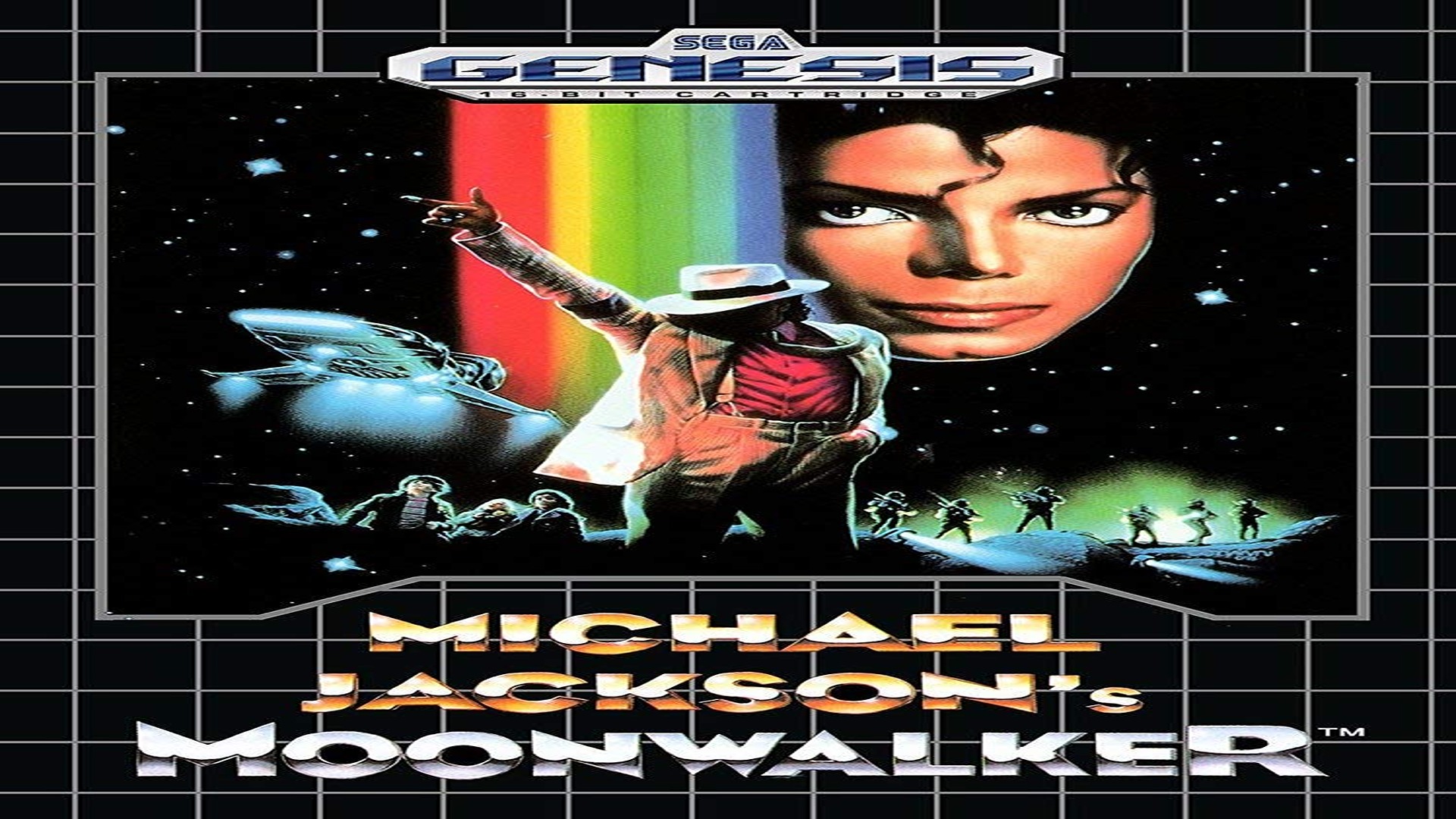
Michael Jackson’s Moonwalker is the name of several video games based on the 1988 Michael Jackson film Moonwalker. Sega developed two beat ’em ups, released in 1990; one released in arcades and another released for the Sega Genesis and Master System consoles. U.S. Gold also published various games for home computers in the same year. Each of the games’ plots loosely follows the “Smooth Criminal” segment of the film, in which Jackson rescues kidnapped children from the evil Mr. Big, and incorporates synthesized versions of some of the musician’s songs. Following Moonwalker, Jackson collaborated with Sega on several other video games. Michael Jackson’s Moonwalker is an arcade video game by Sega (programming) and Triumph International (audiovisuals), with the help of Jackson which was released on the Sega System 18 hardware. The arcade has distinctively different gameplay from its computer and console counterparts, focusing more on beat ’em up gameplay elements rather than platform gameplay. The game is essentially a beat-em-up that is drawn using isometric video game graphics, although Jackson attacks with magic powers instead of physical contact, and has the ability to shoot short-ranged magic power at enemies. The magic power can be charged by holding the attack button to increase the range and damage of the magic power while moonwalking. If up close to enemies, Jackson executes a spinning melee attack using magic power. If the cabinet supports it, up to three people can play simultaneously. All three players play as Jackson, dressed in his suit (white for player 1, red for player 2, black for player 3).
Jackson’s special attack is termed “Dance Magic”. There are three different dance routines that may be performed, namely the dance routines from Smooth Criminal, Beat It and Billie Jean. The player starts with one to three of these attacks per credit (depending on how the machine is set up). Bubbles, Michael’s real-life pet chimpanzee, appears in each level. Once collected or rescued, Bubbles transforms Michael into a robotic version, with the ability to shoot laser bursts and missiles and absorb significantly more damage. In 1988, Michael Jackson contacted Sega about developing a video game that would capture his persona. Sega and Jackson then began working on an arcade video game based on his Moonwalker film and “Smooth Criminal” music video released that year. A prototype unit was demonstrated at Mexico’s American Amusement Machine Association (AAMA) exhibition in early July 1990. Jackson assisted Sega’s game designers in the development of the game. In North America, the game had a successful launch. It was the top-grossing new video game on the RePlay arcade charts in September 1990. The game received a positive review from RePlay magazine. Home versions of the game were released for Sega’s Mega Drive/Genesis and Master System home video game systems though the gameplay was completely different from the arcade version. A version was also rated by PEGI for release on Virtual Console, but it never materialized, and it was never specified which version was considered for rerelease. The home console versions were actually based on an evolved version of the home computer version of the game (with gameplay somewhat similar to the Shinobi series), in contrast to the arcade version which was a three-quarters view shooter/fighter type game. The game involves the player controlling the pop star in a quest to save all the kids that have been kidnapped by Mr. Big. The game’s levels and music were borrowed from the film (though many of the music tracks were taken from Jackson’s Thriller album as well) and the player can destroy enemies by making them dance. Jackson can become a robot by rescuing a certain child and then grabbing a comet that falls from the sky. The gameplay is focused on finding children, all of whom resemble Katie from the movie, who are scattered throughout the levels, some behind objects such as doors. Most of the objects are empty or contain enemies. Jackson’s standard attack is a stylized high kick that is commonly incorporated into his dance routines; in the Sega Genesis version, Jackson’s attacks fire off blue sparks, giving him greater offensive range. If the player continues to hold the attack button, and moves Jackson backwards, he performs his Moonwalk dance move. Jackson also has a special attack button which, when held, will cause him to start spinning; releasing it will cause him to throw his hat at enemies, destroying them instantly, but if the button is held for longer, Jackson will bring all on-screen enemies together to start dancing to his music. Once the choreography is finished, all enemies are damaged or defeated. These special attacks cost Jackson some health, sapping up to half his full life bar at full charge. Rescuing children restores some of Jackson’s health. Once all children are rescued, Bubbles will mount on Michael’s shoulders and point him in the direction of the level’s final confrontation, where Mr. Big taunts him before sending waves of enemies for Jackson to defeat (on the Master System version, Bubbles is absent, and the levels cut straight from the final child to the enemy rush). A prototype of the Sega Genesis version dated April 24, 1990, surfaced that contains various differences from the final version. Most notably a full Thriller music track is present in the graveyard stage as well as a different final boss battle which is incomplete. Other differences include but are not limited to: changes in level layouts, different cutscenes, as well as minor differences in sound samples and other musical tracks. The prototype was acquired by Landon White who dumped and preserved the ROM file online on August 6, 2018. The game features four different levels. The first level is a top-down maze-style level. The next level has similar gameplay, riding the motorcycle and collecting tokens. The third level is a side-scrolling level based on the “Smooth Criminal” clip. The player collects ammunition and shoots at gangsters in openings above the player character. The last level involves morphing into a robot and shooting at soldiers in openings, with the player controlling a crosshair. MegaTech said that the Mega Drive version was an addictive platform game that had “excellent graphics.” Mega magazine placed the game at number 91 in their list of the best Mega Drive games of all time, saying it was average. In 2004, the Genesis version of Moonwalker was inducted into GameSpot’s list of the greatest games of all time. Your Sinclair compared the ZX Spectrum version of the game to Gauntlet and Operation Wolf, saying it was well-animated and “a surprising amount of fun.”
#2 SONIC THE HEDGEHOG 1
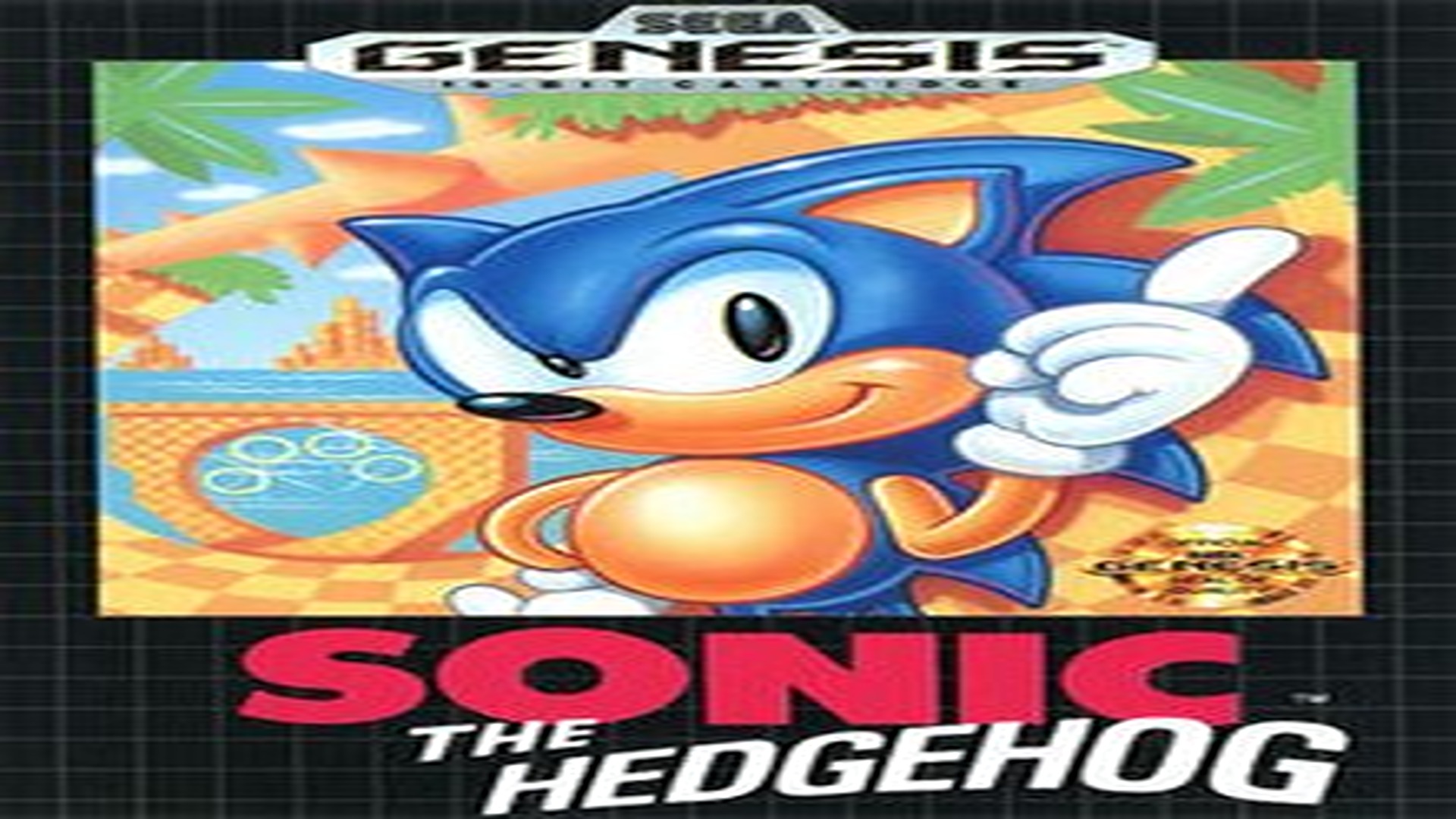
Released in 1991 it is a platform game developed by Sonic Team and published by Sega for the Genesis/Mega Drive. It was released in North America on June 23 and in PAL regions and Japan the following month. Players control Sonic the Hedgehog, who can run at near supersonic speeds; Sonic sets out on a quest to defeat Dr. Robotnik, a scientist who has imprisoned animals in robots and seeks the powerful Chaos Emeralds. The gameplay involves collecting rings as a form of health, and a simple control scheme, with jumping and attacking controlled by a single button. Development began in 1990 when Sega ordered its developers to create a game featuring a mascot for the company. The developers chose a blue hedgehog designed by Naoto Ohshima after he won an internal character design contest, and named themselves Sonic Team to match their character. It uses a novel technique that allows Sonic’s sprite to roll along curved scenery which was based on a concept by Oshima from 1989. Sonic the Hedgehog, designed for fast gameplay, was influenced by games by Super Mario series creator Shigeru Miyamoto. The music was composed by Masato Nakamura, bassist of the J-pop band Dreams Come True. Sonic the Hedgehog received positive reviews for its visuals, audio and gameplay and is widely considered one of the greatest video games. It sold nearly 24 million copies across all platforms, becoming one of the best-selling video games. On the Genesis, which it was bundled with, it sold over 15 million copies, making it the best-selling Genesis game.[not verified in body] It established the Genesis as a key player in the 16-bit era and made it competitive with the Super NES. It has been ported to multiple systems and inspired several clones, a successful franchise, and adaptations into other media. Sonic the Hedgehog 2 was released in 1992. Sonic the Hedgehog is a 2D side-scrolling platform game. The gameplay centres on Sonic the Hedgehog’s ability to run at high speed through levels that include springs, slopes, bottomless pits and vertical loops. The levels are populated with robot enemies, inside which Dr. Robotnik has trapped animals; destroying a robot frees the animal, but is not necessary to complete the game. The player must also avoid touching spikes, falling into bottomless pits, being crushed by moving walls or platforms, and drowning, which may be prevented by breathing air bubbles from vents. Sonic’s main means of attack is the spin attack, in which he curls into a ball and spins his body, damaging enemies and certain obstacles upon collision. This may be performed by jumping or rolling. At the start of the game, the player is given three lives, which may be lost if Sonic collides with hazardous enemies or objects while in possession of no rings, falls to the bottom of the level screen, or exceeds an act’s ten-minute time limit. Signposts act as checkpoints to allow Sonic to return to the most recently activated post when he loses a life. The time resets when he returns to the checkpoint. The game ends when the player runs out of lives, although the player may return to the beginning of the act with three lives if they have any continues. Scattered around each level are gold rings. Collecting 100 rings rewards the player with an extra life. Rings act as a layer of protection against hazards: if Sonic holds at least one ring when he collides with an enemy or dangerous obstacle, all his rings will scatter. He can recollect some of them again before they disappear. If he is hit without holding any rings, he loses a life. Shields and temporary invincibility can be collected to provide additional layers of protection. Still, certain hazards, such as drowning, being crushed, falling into bottomless pits, or running out of time, kill Sonic regardless of rings or other protection. The game is split into six principal zones and a short Final Zone. Each main zone has its own visual style, and while some enemies appear throughout, each zone has unique enemies and obstacles. Each main zone is split into three acts, all of which must be completed. At the end of each main zone’s third act, the player confronts Dr. Robotnik for a boss fight. For most of the fights, Robotnik’s vehicle is fitted with different weapons. After completing the sixth zone, the player continues to the single-level Final Zone for a last encounter with Robotnik inside a large machine environment. Destroying Robotnik’s machine ends the game. A brief animation shows Sonic’s return to the first zone, with animals liberated from Dr. Robotnik. If Sonic reaches the end of any zone’s Act 1 or Act 2 while holding at least 50 rings, a large ring appears through which he can jump to enter a bonus stage. In them, Sonic is continually curled up in his Spin Attack animation and bounces off the bumpers and walls of a fully rotating maze. In these levels, the player earns several continues for each multiple of 50 rings collected, but the main goal is to obtain the Chaos Emerald hidden within the maze. Colliding with any of the blocks marked “GOAL” ends the level. In his attempt to steal the six Chaos Emeralds and harness their power, Dr. Ivo Robotnik has trapped the animal inhabitants of South Island inside aggressive robots and stationary metal capsules. The player controls Sonic, who aims to thwart Robotnik’s plans by freeing his animal friends and collecting the emeralds himself. If the player collects all the Chaos Emeralds and completes the game, an ending sequence is shown. If all the emeralds are not collected, Robotnik taunts the player while juggling any of the Chaos Emeralds not collected by the player. In the 1980s, Sega had limited success with Genesis ports of its arcade games but wanted a stronger foothold against its main competitor, Nintendo. In 1988, Sega of Japan began an in-house competition to create a rival to Nintendo’s mascot Mario. For the next three years, programmers and designers at Sega worked on a brand character to rival Mario. In 1990, Sega ordered its in-house development studio to develop a game featuring a mascot for the company. Sega’s president Hayao Nakayama wanted a character as iconic as Mickey Mouse. The team developed ideas for characters, an engine, and gameplay mechanics. Development emphasized speed, so Sega considered fast creatures such as kangaroos and squirrels and eliminated designs not associated with fast animals. One idea, a rabbit able to grasp objects with prehensile ears, showed promise but was too complex for the Genesis hardware. The team narrowed its search to animals that could roll into a ball, their idea for an attacking move, and considered armadillos and hedgehogs. The hedgehog character, proposed by Naoto Ohshima, prevailed. Ohshima went on vacation to New York, taking sketches with him. He went to Central Park and asked locals for their opinions on them, and Sonic was the favourite. A man with a moustache, who eventually became Dr. Robotnik, was in second place. Sonic was originally teal-coloured, then a light shade of blue, but he was changed to dark blue so he would stand out against certain backgrounds and to match the Sega logo. According to Ohshima, Sonic’s basic design was created by combining Felix the Cat’s head with Mickey Mouse’s body. His shoes had buckles through the inspiration of Michael Jackson’s boots on the album cover for Bad and the red and white colour scheme of Santa Claus, whom Ohshima saw as the most “famous character in the world”. Sonic’s spikes were emphasized to make him sleeker, and he was given the ability to spin while jumping (so attacking and jumping could be controlled with one button). The new character was originally named “Mr. Hedgehog”, but the eight-member team changed his name to “Sonic” and took the name Sonic Team. Sonic the Hedgehog was a commercial success. It became America’s best-selling video game for several months in 1991, outselling Super Mario. By Christmas 1991, Sonic the Hedgehog had sold nearly 1 million game cartridges in the United States. It was also Blockbuster Video’s highest-renting game of the year. In the United Kingdom, it was the top-selling Mega Drive game for two months following its release. Sonic the Hedgehog was the best-selling home video game of 1991 with 2 million copies sold worldwide by the end of the year, becoming Sega’s best-selling home video game up until then. In 1991, Sonic the Hedgehog helped Sega generate a gross revenue of $1 billion in console sales and capture a 65% share of the European console market. Sonic the Hedgehog set a Sega software sales record with 2.8 million cartridges sold by March 1992, including 1.8 million copies in the United States and another 1 million in Europe and Japan. The game went on to sell 3.7 million units by October 1992, and 4.5 million copies worldwide by November 1992. By 1997, the game had sold over 14 million copies worldwide, and earned over $400 million ($890 million adjusted for inflation), higher than the $200–300 million typically grossed by a blockbuster movie at the time. As of February 2009, the original version bundled with the Sega Genesis/Mega Drive hardware had sold over 15 million copies. The mobile game version also had eight million paid downloads by 2008. As of 2011, 482,960 units were sold on Xbox Live Arcade, and over 500,000 paid Android downloads were sold between 2013 and 2016, bringing total sales to nearly 24 million worldwide across all platforms. This is my second favourite retro game from the 90s and something I was brought up with.
#1 MORTAL KOMBAT

Released in 1992 and is a fighting game developed and published by Midway. It is the first entry in the Mortal Kombat series and was subsequently released by Acclaim Entertainment for nearly every home platform at that time. The game focuses on several characters of various intentions who enter a martial arts tournament with worldly consequences. It introduced many key aspects of the Mortal Kombat series, including the unique five-button control scheme and gory finishing moves called Fatalities.
Mortal Kombat is considered by critics to be one of the greatest video games ever made. It spawned numerous sequels and spin-offs, beginning with Mortal Kombat II in 1993. Both games were the subject of a film adaptation in 1995. However, it also sparked much controversy for its depiction of extreme violence and gore using realistic digitized graphics and, along with the home releases of Night Trap and Lethal Enforcers, prompted the formation of the Entertainment Software Rating Board (ESRB), a U.S. government-backed organization that set descriptor ratings for video games. Mortal Kombat is a fighting game in which players battle opponents in one-on-one matches. The fighter that drains the opponent’s health bar first wins the round, and the first to win two rounds wins the match. Each round is timed; if both fighters still have health remaining when time runs out, the one with more health wins the round. Two players can start a game together, or a second player can join in during a single-player game to fight against them. If a game was in progress at the time, the winner continues it alone; if not, the winner begins a new game. Mortal Kombat uses an eight-directional joystick and five buttons, including two punch and two kick buttons, each further differentiated between high and low. Attacks can vary depending on the player’s distance from the opponent. All player characters have a shared set of attacks performed by holding the joystick in various directions, such as a leg sweep and an uppercut. The latter attack knocks the enemy high into the air and causes a large amount of damage. Most special moves were performed by tapping the joystick, sometimes ending with a button press. Unlike previous one-on-one fighting games, few moves require circular joystick movement. The game’s blocking system also distinguished itself from other fighting games, as characters take a small amount of damage from regular moves while blocking. However, the dedicated block button allows users to defend against attacks without retreating and blocking characters lose very little ground when struck, thus making counterattacks much easier after a successful block. Mortal Kombat further introduced the concept of “juggling”, knocking an opponent into the air and following up with a combination of attacks while the enemy is still airborne and defenceless. The idea became so popular that it has spread to many other games. Another of the game’s innovations was the Fatality, a finishing move performed against a defeated opponent to execute them in a gruesome fashion. In the single-player game, the player faces each of the seven playable characters in a series of one-on-one matches against computer-controlled opponents, ending in a “Mirror Match” against a duplicate of the player’s chosen character. The player must then fight in three endurance matches, each of which involves two opponents. As soon as the player defeats the first opponent, the second one enters the arena and the timer resets; however, the player’s health meter does not regenerate. After the third endurance match, the player fights the sub-boss Goro, followed by a final match against Shang Tsung. Between certain levels, players can compete in a minigame called “Test Your Might” for bonus points, breaking blocks of various materials by filling a meter past a certain point through rapid button presses. The first material the player must break is wood, followed by stone, steel, ruby, and finally diamond, with each successive material requiring more of the meter to be filled up and thus awarding more points. Two players can compete in the minigame at once and the last two materials are only accessible through two-player mode. The minigame returned in various forms in Mortal Kombat: Deadly Alliance, Mortal Kombat: Shaolin Monks, Mortal Kombat vs. DC Universe, Mortal Kombat: Komplete Edition, Mortal Kombat X, and its DLC counterpart, Mortal Kombat XL. The game takes place in Earth realm, where a tournament is being held on Shang Tsung’s Island, on which seven of its locations serve as stages in the game. The introduction to Mortal Kombat explains that Shang Tsung was banished to Earth realm 500 years ago and, with the help of the monstrous Goro, can seize control of the Mortal Kombat tournament in an attempt to doom the realm. For 500 years straight, Goro has been undefeated in the tournament and won nine consecutive tournaments. If Goro wins again, Shao Kahn, Emperor of Outworld, will be allowed to take Earth realm. To prevent this, a new generation of warriors must challenge Goro.
According to the Mortal Kombat series’ canon, Liu Kang won this tournament under Raiden’s guidance, defeating Goro and Shang Tsung and freeing the many souls that Tsung had imprisoned over the centuries. Scorpion pursues Sub-Zero and finally faces him after the end of the tournament, killing him and avenging his own death. Sonya rescues her special forces squad which had been held hostage by Shang Tsung. She fails to apprehend Kano, however, who escapes the island on a boat. The reptile, unsure of his fate, flees to the Outworld. Raiden then teleports the surviving Earthrealmers to safety as Shang Tsung’s island crumbles into the sea. Returning to Hollywood, Johnny Cage uses the experience to revive his failing acting career and develops a highly popular film franchise called Mortal Kombat. In Outworld, an outraged Shao Kahn refuses to accept the outcome of the tournament, setting up the events of the second game. The player receives information about the characters in biographies displayed during the attract mode. The bulk of the game’s backstory and lore was only told in a comic book, but some additional information about the characters and their motivations for entering the tournament is received upon completion of the game with each character. Mortal Kombat creators Ed Boon and John Tobias have stated that Midway Games tasked them with the project of developing a “combat game for release within a year”, which the two believed was intended to compete with the popular Street Fighter II. According to Tobias, he and Boon had envisioned a fighting game similar to Data East’s Karate Champ but featuring large digitized characters even before that, and the success of Capcom’s Street Fighter II only helped them convince the management of their idea. Boon said the development team initially consisted of four people — himself as a programmer, artists John Tobias and John Vogel, and Dan Forden as sound designer. The game’s budget was around $1 million. According to Richard Divizio and Daniel Pesina, Mortal Kombat had actually begun when Tobias along with Divizio and the brothers Daniel and Carlos Pesina planned to create a ninja-themed fighting game, however this idea was rejected by Midway’s management. Instead, Midway sought to make an action game based on the upcoming movie Universal Soldier and featuring a digitized version of martial arts film star Jean-Claude Van Damme, but he was already in negotiations with another company for a video game that ultimately was never released. Divizio then convinced Tobias to return to their original project. In the end, Van Damme was parodied in the game in the form of Johnny Cage (with whom he shares his name’s initials, JC), a narcissistic Hollywood movie star who performs a split punch to the groin in a nod to a scene from Bloodsport. Tobias credited other inspirations as having come from the Asian martial arts cinema. Boon later said, “Since the beginning, one of the things that have separated us from other fighting games is the crazy moves we’ve put in it, like fireballs and all the magic moves, so to speak.” According to Tobias, the game’s ultraviolent content had not been originally intended and was only implemented gradually as the development progressed. The concept of Fatalities in particular evolved from the “dizzied” mechanic in earlier fighting games. Boon said that he hated the “dizzied” mechanic, but that it was fun to have one’s opponent get dizzied and get in a free hit. Boon and Tobias decided they could eliminate the aggravation of getting dizzied by having it occur at the end of the fight after the outcome had already been decided. An early version of the game used two more buttons for middle punch and kick attacks. Mortal Kombat was reportedly developed in 10 months from 1991 to 1992, with a test version seeing limited release halfway through the development cycle. As a demo version of the game, which featured only six characters (all male), became internally popular within Midway offices, the team was given more time to work on it, resulting in the addition of Sonya to the roster. Footage for the game’s digitized characters was filmed with Tobias’ personal Hi-8 camcorder. The final arcade game used eight megabytes of graphics data, with each character having 64 colours and around 300 frames of animation. The team had difficulty settling on a name for the game. Ed Boon has stated that for six months during development “nobody could come up with a name nobody didn’t hate.” Some of the names suggested were Kumite, Dragon Attack, Death Blow, and Fatality. One day, someone had written down “combat” on the drawing board for the names in Boon’s office and someone wrote a K over the C, according to Boon, “just to be kind of weird.” Pinball designer Steve Ritchie was sitting in Boon’s office, saw the word “Kombat” and said to him, “Why don’t you name it Mortal Kombat?”, a name that Boon stated “just stuck.” John Tobias recalled this a bit differently, saying it “came about during the trademark process in naming the game. We really liked Mortal Combat as a name, but it couldn’t get past legal.” Since then, the series has begun frequently using the letter K in place of the letter C when it has the hard C sound. In the United States, RePlay reported Mortal Kombat to be the second-most-popular upright arcade cabinet in September 1992. It then topped the RePlay upright arcade cabinet charts from October to November 1992, then from February to March 1993, and then in November 1993. It also topped the Play Meter arcade chart in December 1992. It was the second top-grossing arcade game of the Summer of 1993, below NBA Jam, according to RePlay. It was one of America’s top two highest-grossing arcade games of 1993 (along with NBA Jam), exceeding the $300,000,000 (equivalent to $630,000,000 in 2023) domestic box office gross of the film Jurassic Park the same year. It also topped the Sega CD sales chart in June 1994. In November 1993, Acclaim announced that they had shipped more than three million copies of Mortal Kombat for home systems, counting the SNES, Genesis, Game Boy and Game Gear versions combined. The game sold 3 million copies worldwide in its first three weeks of release. In the United States, it was the top-selling Sega Genesis and SNES game in January 1994. In the United Kingdom, it was the top-selling home video game in October 1993, the top-selling Sega Master System game for four months in 1994 (from May to August), and the top-selling Mega CD game in June 1994. By July 1994, the home cartridge versions had sold more than 6 million units worldwide and grossed over $300,000,000 (equivalent to $630,000,000 in 2023) in sales revenue. As of 2000, it has sold 6.5 million cartridges across all home consoles, with the Genesis version accounting for the majority of sales. An additional million cartridges of the Game Boy version were sold. As of 2002, the original arcade version has sold 24,000 arcade units and grossed an estimated $570 million. The game also generated licensing fees from films and TV shows, bringing total game and licensing revenue to $1.5 billion as of 2002.